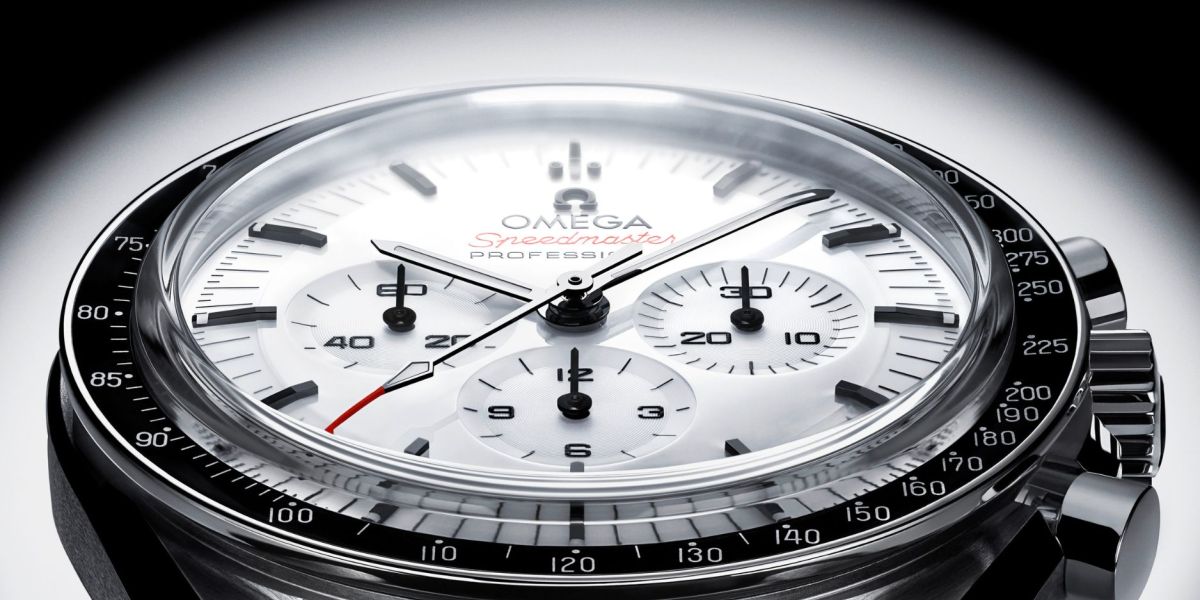

The iconic chronograph gets a rare white dial inspired by what else but space exploration
When it comes to the Speedmaster, an easy-to-read display with superb legibility has been the one constant since its creation in 1957. Hence, the white hands and indexes on a black dial.
This new version might feature the colour reversal of a white dial with black detailing and new applied indexes, but the designers at Omega have ensured that the end-result is the same.
Other details worth noting are the Speedmaster name in red (more on this later) and the watch’s glossy lacquered finish—the first time this technique has ever been used on the Moonwatch’s step dial.
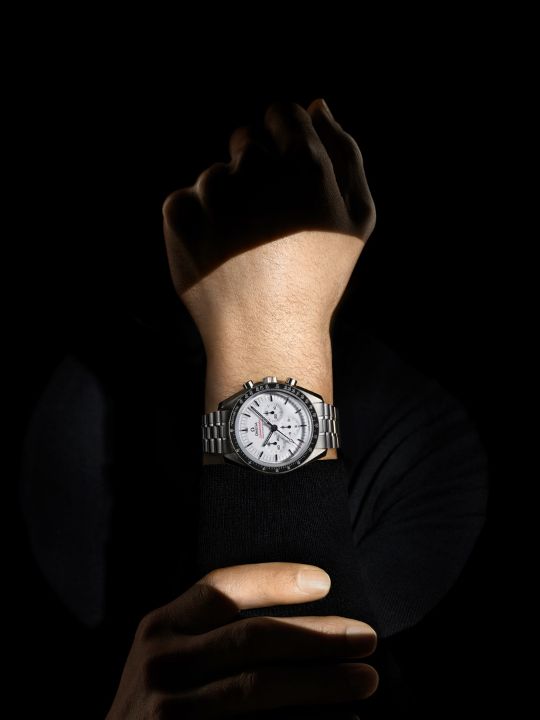
As all horology buffs know, the Speedmaster Moonwatch has been officially worn by NASA astronauts since 1965 and is known as the first watch worn on the Moon.
So, the primary inspiration for this iteration is the white and black colours of astronaut spacesuits—especially those used during extravehicular activity (EVA), such as spacewalks.
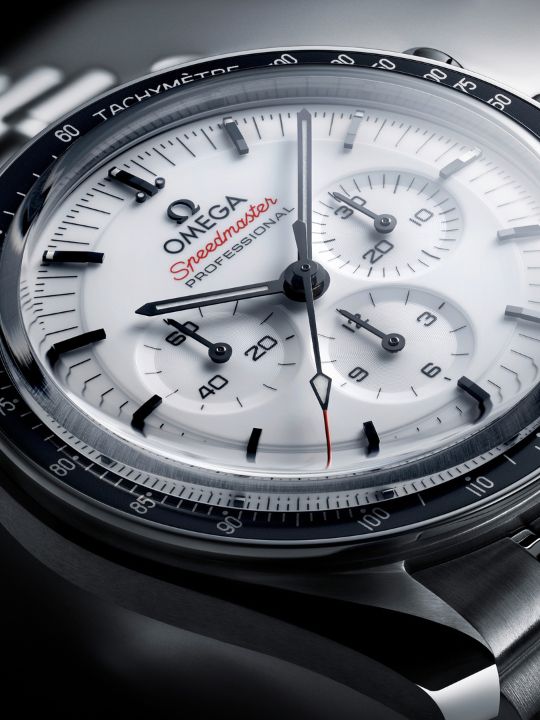
There is also another reason for this look. In 1969, Omega created the Alaska I prototype as part of its secret NASA project to design the perfect space watch. A white dial was chosen, Omega says, because it provides a particularly effective thermal reflection coefficient.
The red Speedmaster name is also a nod to the protective red case that surrounded the original ALASKA I watch.
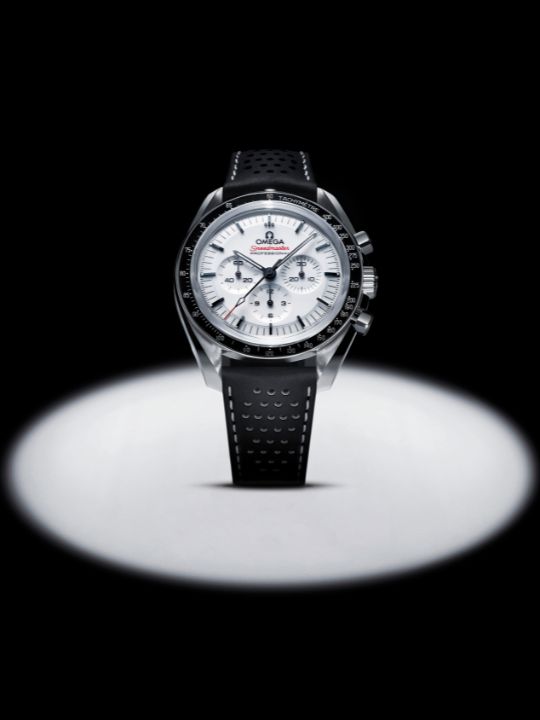
The 42mm stainless-steel timepiece with polished and brushed detailing is presented on a vintage-inspired stainless-steel bracelet with five arched links per row.
Two more versions are also available: one on a black micro-perforated leather strap with red and white stitching, and another on an anti-bacterial rubber strap with a moon surface pattern on the underside for increased comfort.
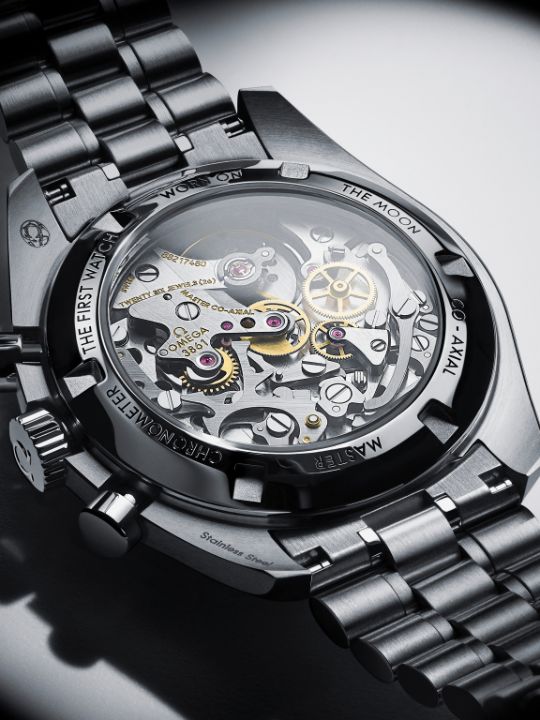
Moonwatch fans may also like to note that the black anodised aluminium bezel of each timepiece has been given a famous “Dot over Ninety” on the tachymeter scale, while inside, the watch is driven by the Co-Axial Master Chronometer Calibre 3861—the most up-to-date version of the legendary Calibre 321 that was trusted by astronauts on the moon.
