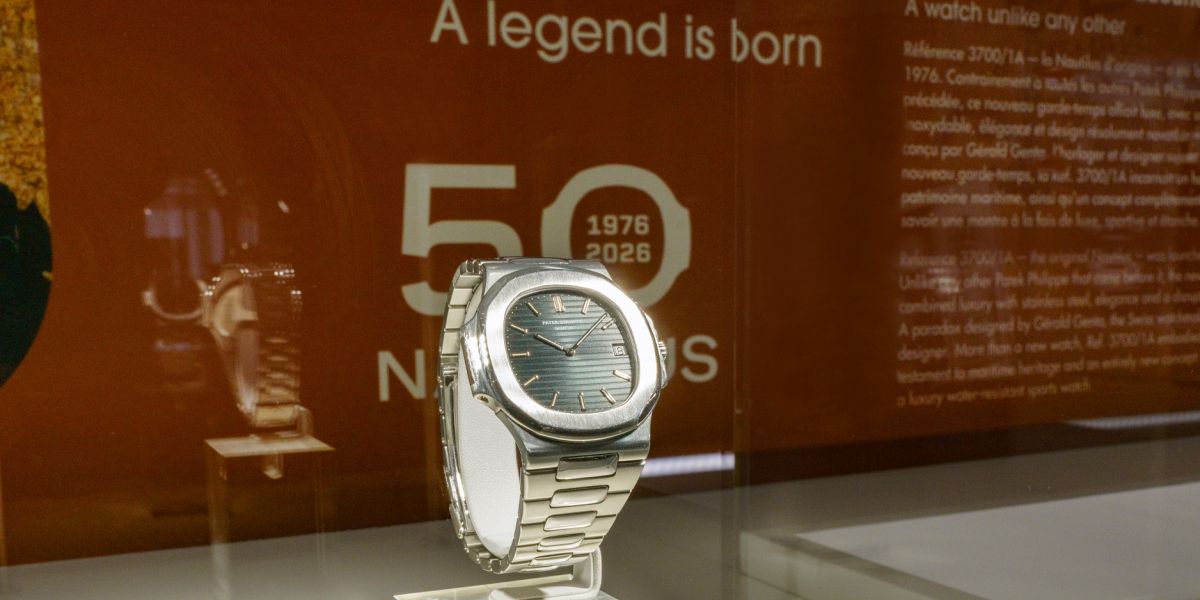
From its controversial debut in 1976 to its 50th anniversary in 2026, trace the horological icon’s remarkable journey through the decades.

The Nautilus is so deeply woven into Patek Philippe’s identity today that it is easy to forget how improbable the proposition once was. That unlikely rise is the focus of “1976–2026: Nautilus, 50th Anniversary of an Icon of Sporty Elegance”, a thematic exhibition at the Patek Philippe Museum in Geneva. Running from June 2026 into early 2027, it draws on the Manufacture’s historical archives and selected watches spanning the collection’s history. For collectors, it also offers a rare opportunity to see the archival material and watches together in the same setting. The result is less a conventional anniversary display than a chronological look at how an unconventional sports watch became one of contemporary watch collecting’s most closely followed designs.
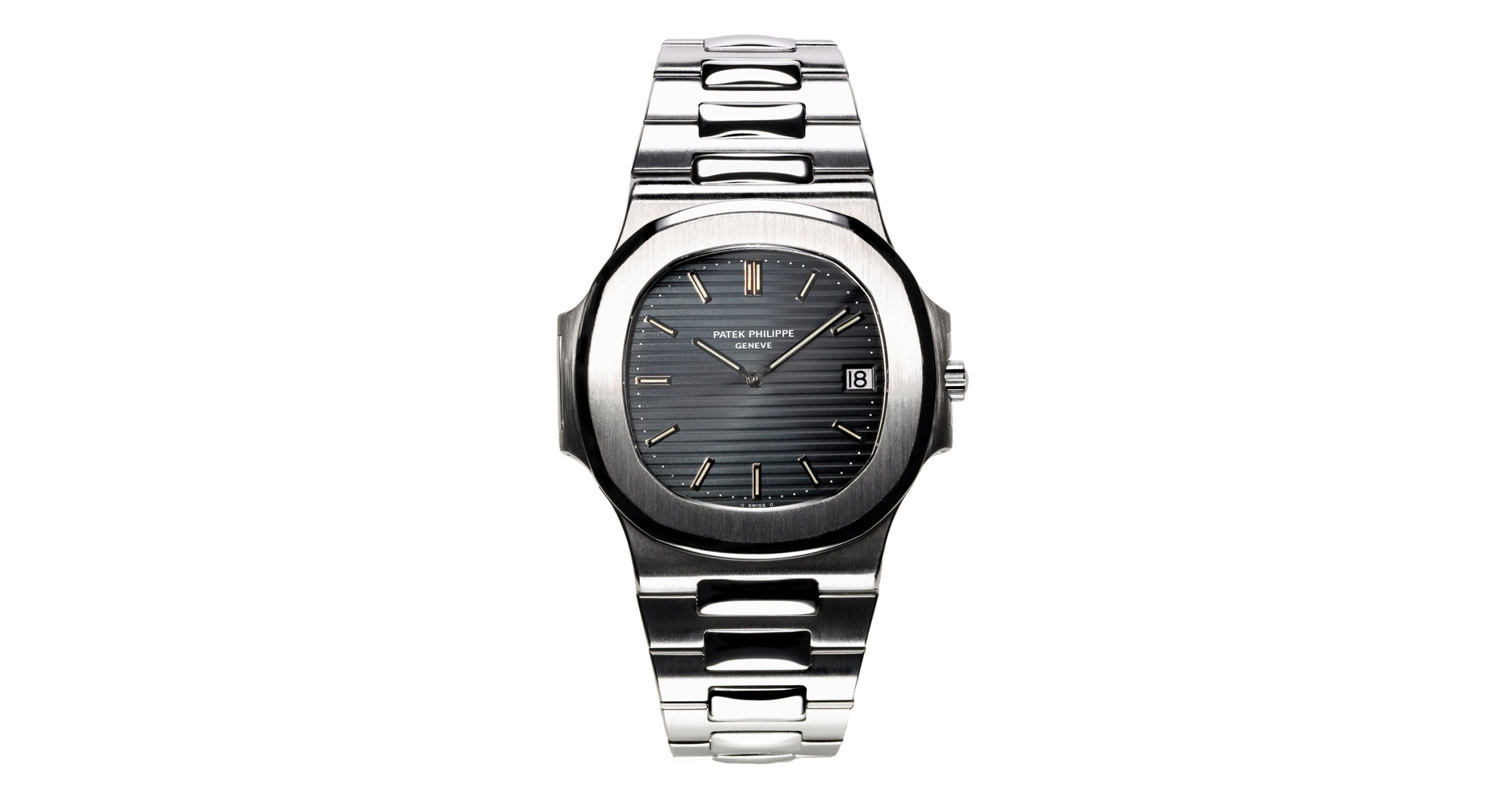
The original Ref. 3700/1A, launched in 1976, was radical partly because of what it was, and partly because of what it wasn’t. Patek Philippe had built its reputation on precious-metal dress watches and traditional complications, yet here was a 42mm stainless-steel sports watch with an integrated bracelet and rounded-octagonal bezel. Gérald Genta’s porthole-inspired design gave it a distinctive architecture, including a two-part case secured by four screws, while the horizontally embossed dial reinforced its nautical character. Patek Philippe later described the watch as an “enfant terrible”, reflecting how unusual it initially seemed within the Manufacture’s established repertoire.
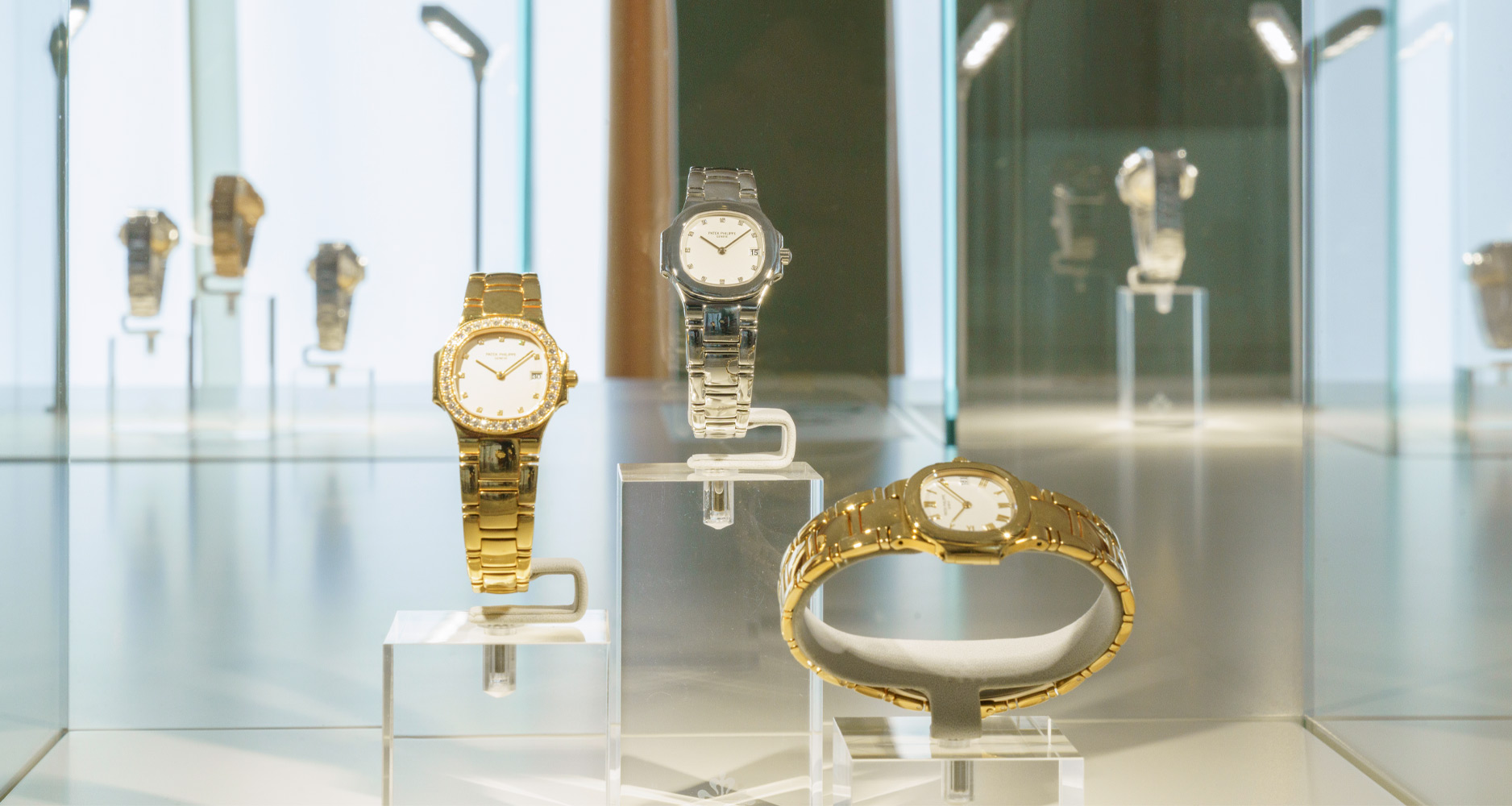
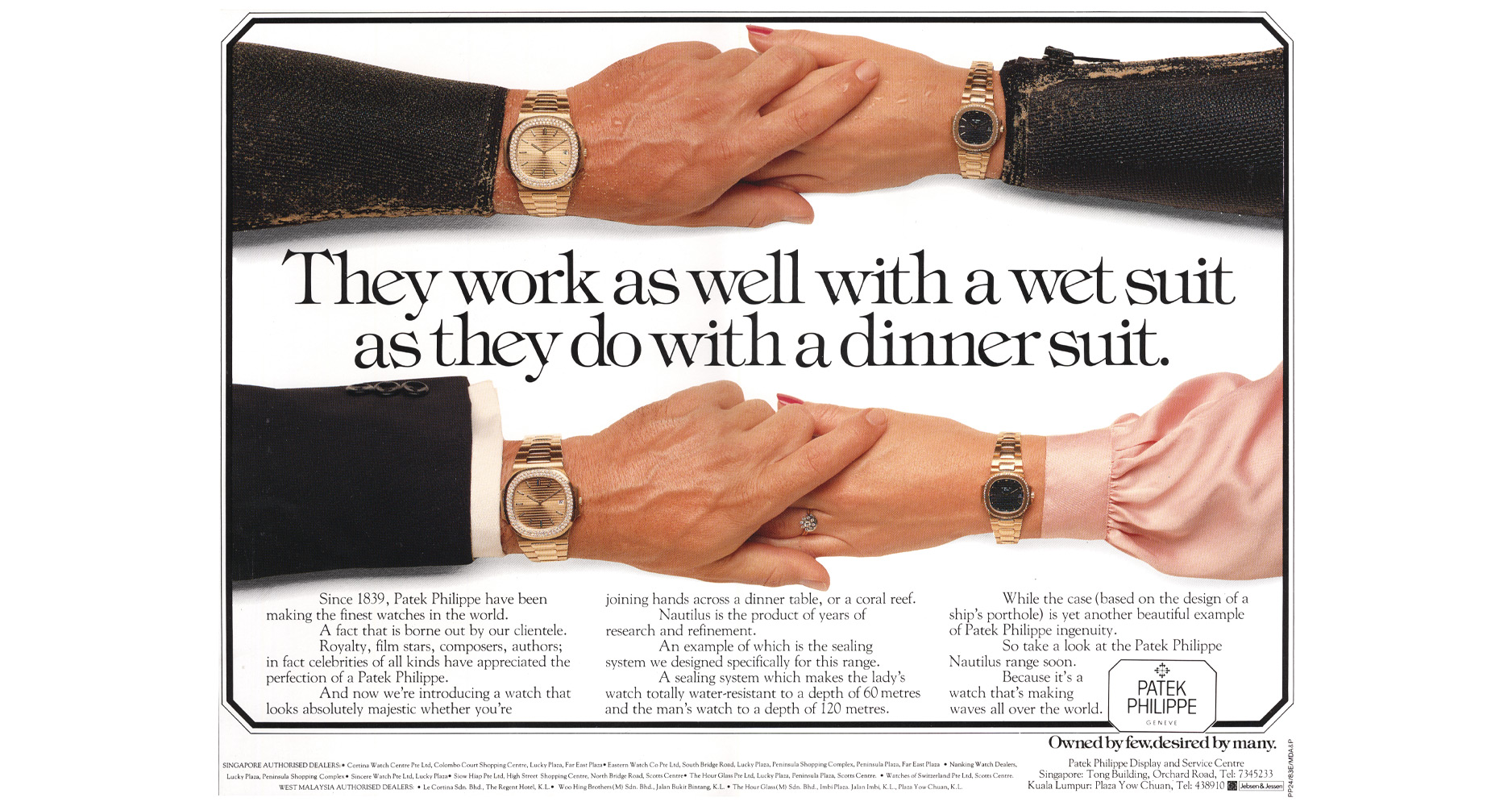
During the 1980s and 1990s, the Nautilus began to demonstrate how adaptable that original proposition could be. The Ref. 3800 offered a more compact 37.5mm interpretation, while ladies’ models and increasingly precious versions broadened its appeal. Complications added another dimension, showing that the sporty architecture could accommodate more than straightforward timekeeping. Advertising from the period captured this versatility with characteristic wit, suggesting that the same watch could be worn with a wetsuit or a dinner suit – with diamonds to boot. The exhibition’s historical examples make that progression tangible, showing how the Nautilus developed from a single, unconventional model into a wider family without abandoning its defining visual character.
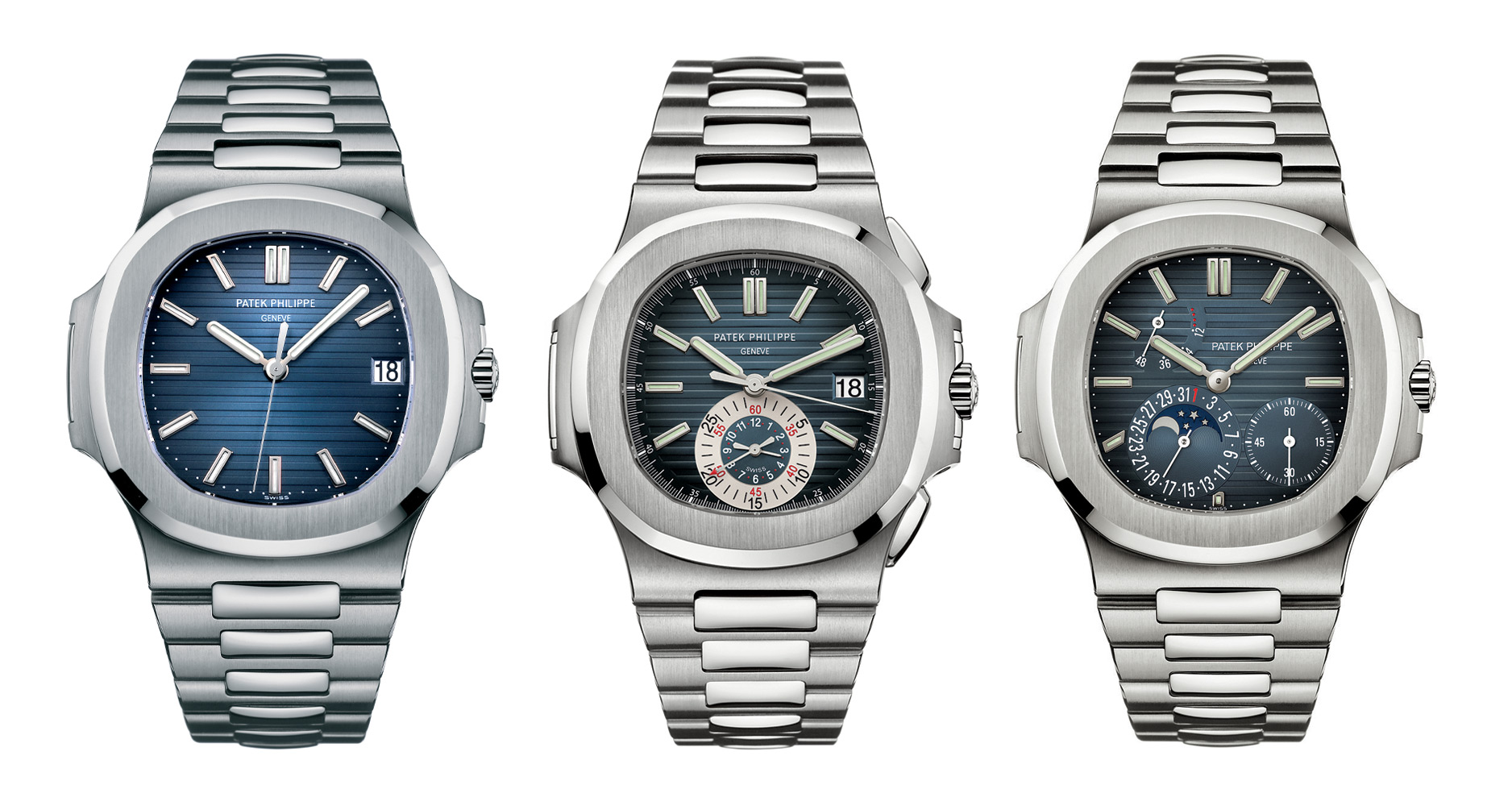
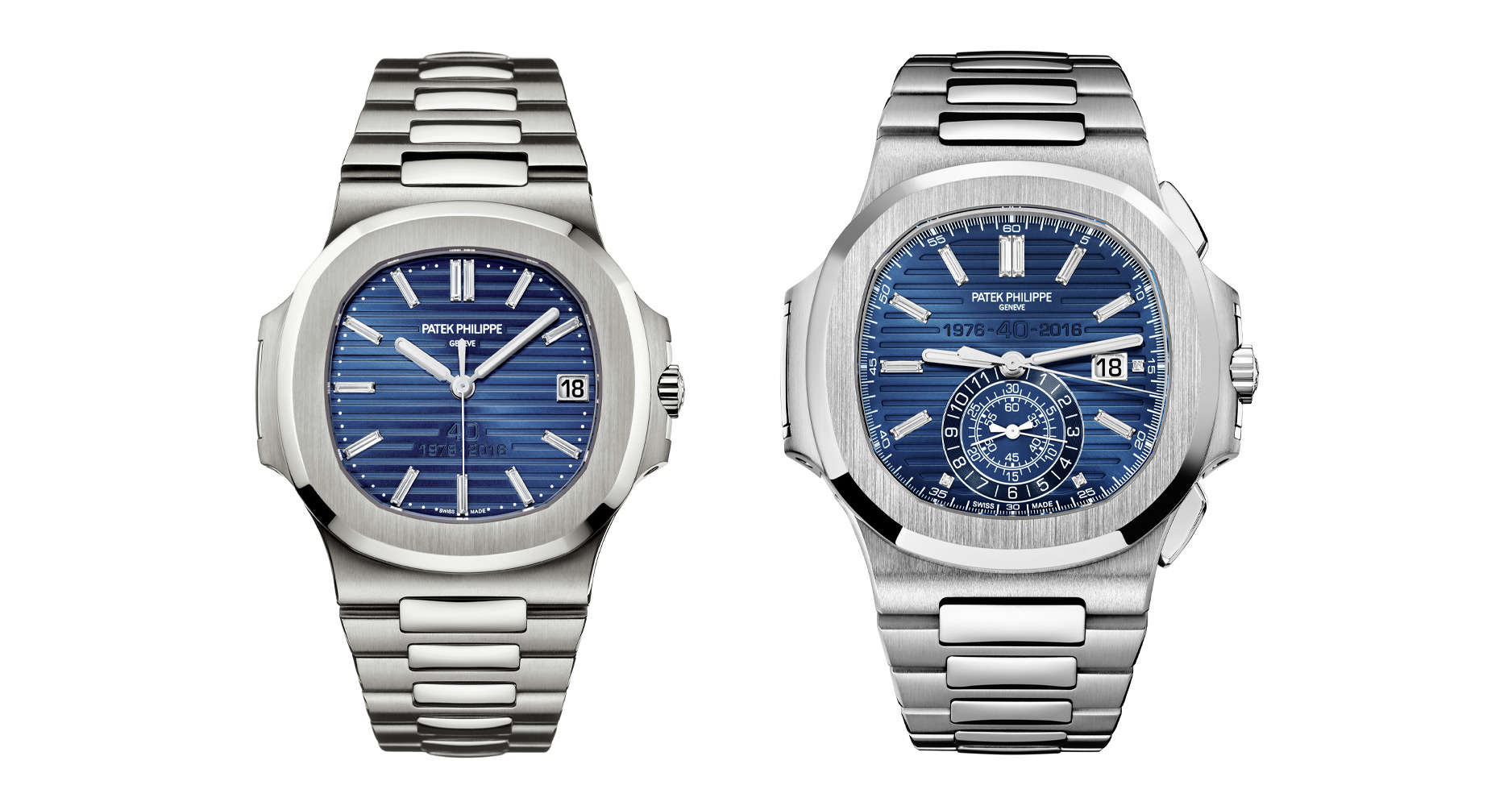
The 30th anniversary in 2006 marked another decisive chapter. Patek Philippe reworked the collection with a new three-part case construction, while the Ref. 5711/1A established the modern expression of the classic three-hand Nautilus. The Ref. 5980/1A brought a chronograph to the family for the first time, while the Ref. 5712/1A introduced an asymmetric display of power reserve, moon phase, date, and small seconds. A decade later, the 40th anniversary was marked by the contrasting platinum Ref. 5711/1P and white-gold Ref. 5976/1G, the latter continuing the chronograph lineage established in 2006. Together, the anniversary editions showed how the Nautilus could evolve in materials, proportions, and complications while preserving its recognisable identity.
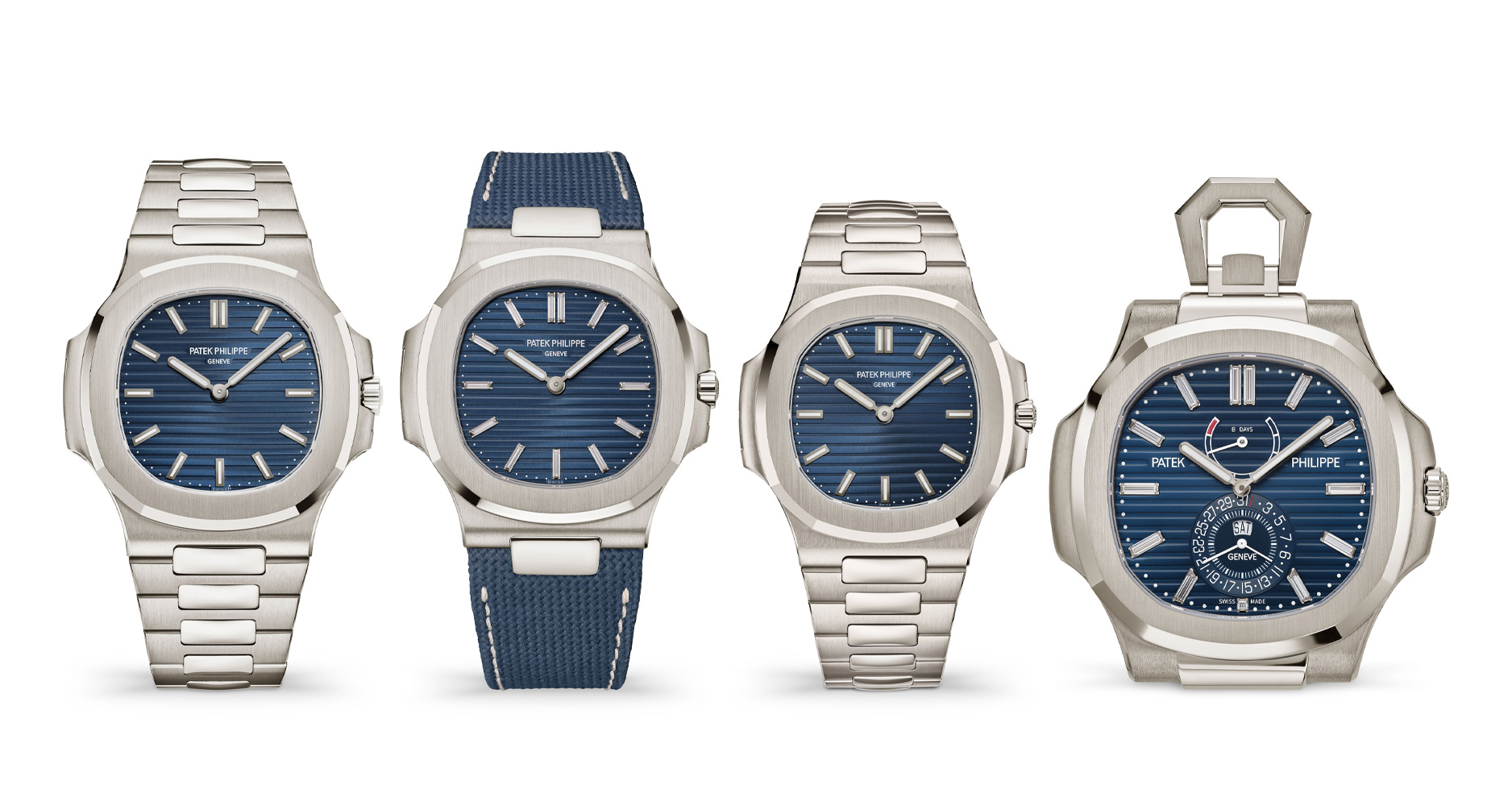
For 2026, Patek Philippe has chosen to revisit some of the Nautilus’ most fundamental qualities, with all four 50th-anniversary creations presented at the exhibition. The Ref. 5610/1P-001, Ref. 5810/1G-001, and Ref. 5810G-001 are straightforward hours-and-minutes wristwatches powered by the ultra-thin self-winding Calibre 240, while the Ref. 958G-001 takes the Nautilus beyond the wrist as a desk clock. The 38mm platinum Ref. 5610/1P-001 recalls the mid-sized proportions associated with the 1980s, while the desk clock combines the collection’s familiar visual language with an eight-day movement and instantaneous calendar. Seen alongside the historical pieces, the quartet makes the exhibition’s central point clear: after five decades, the Nautilus can change considerably without sacrificing its identity.
{youtubesub)
