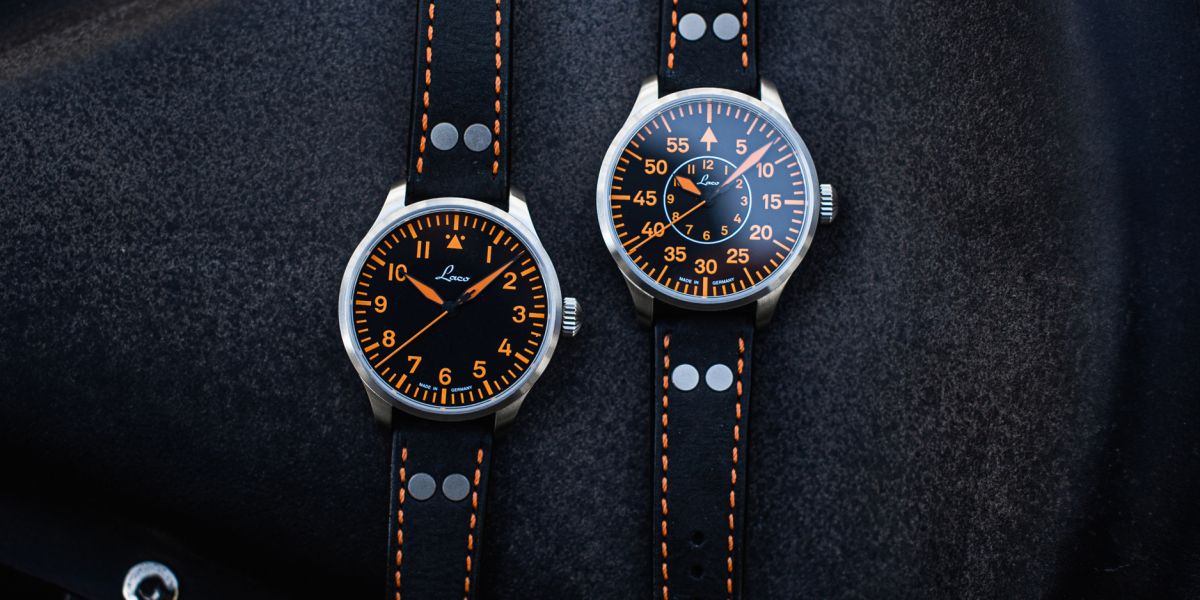

Taking flight with these everyday companions.
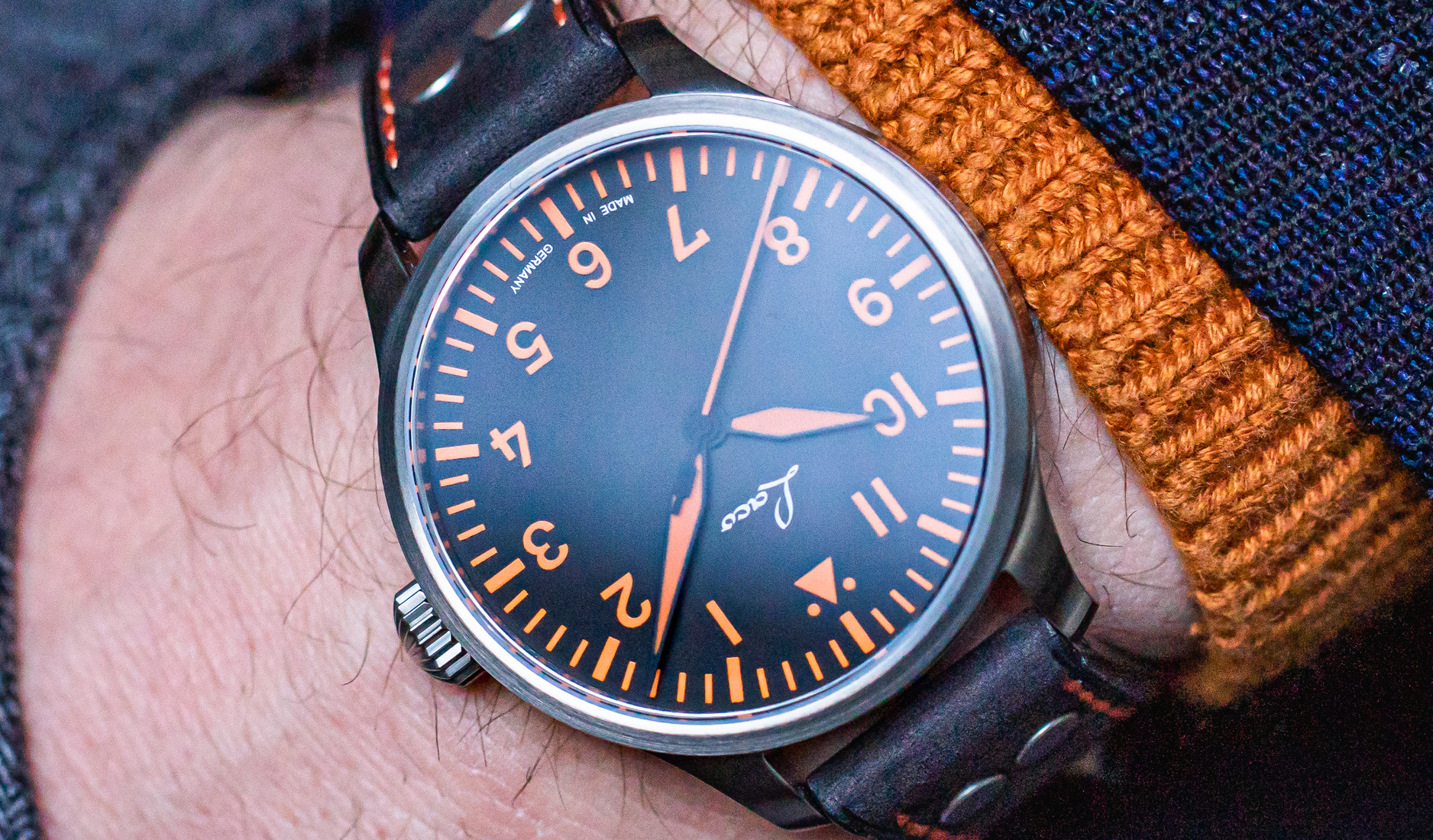
Born in 1925, Laco has its roots in Pforzheim, Germany. While they initially used Swiss movements, they've since included Miyota base movements as well. With a DNA in pilot's watches, Laco maintains a distinctive vintage aviator’s aesthetic where the indices and hour markers are prominent and bold for easy reading, and a triangle at 12 o’clock denotes the last hour on the dial.
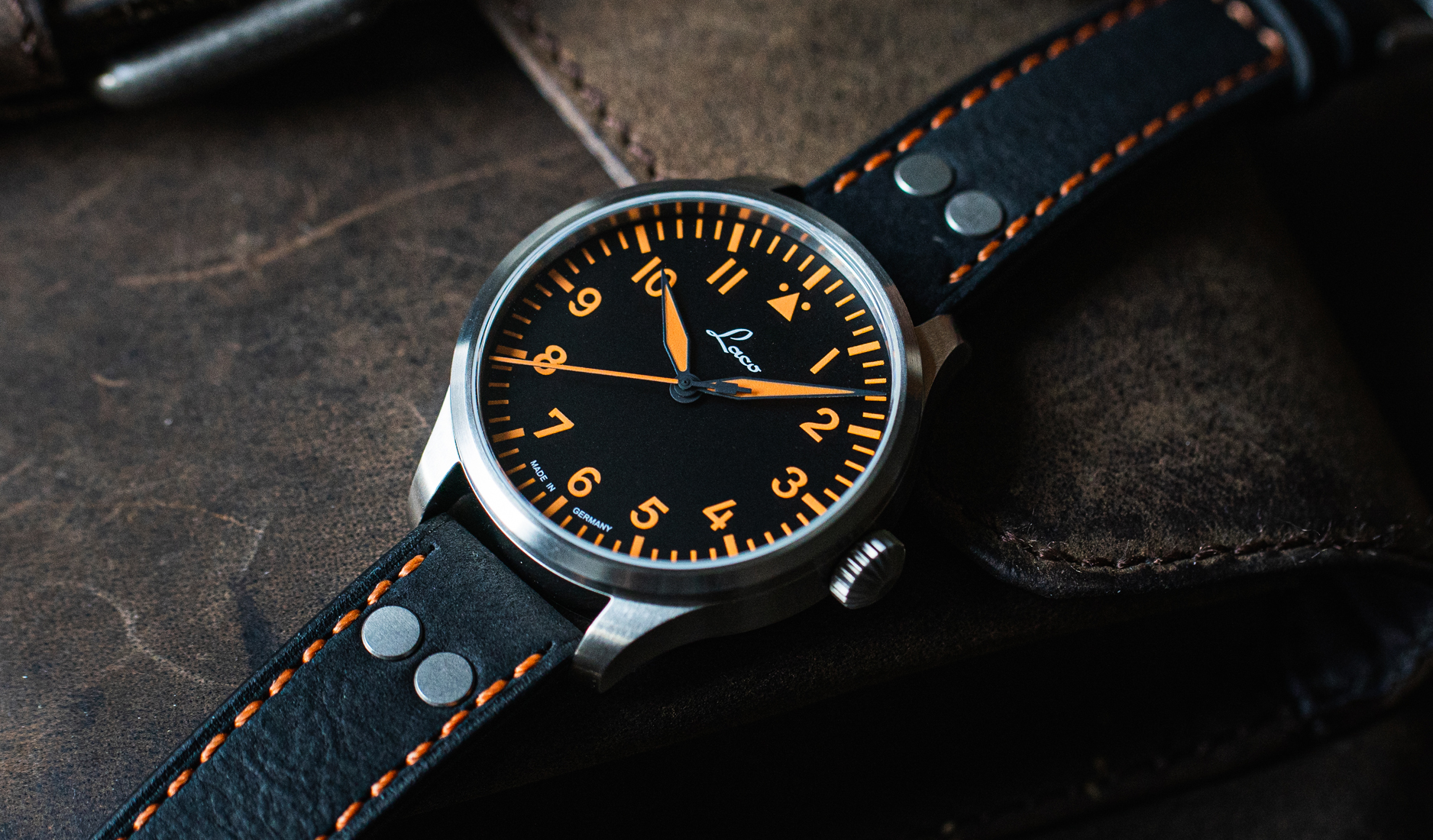
One interesting feature to note is that Laco names each collection after a city that has a military airbase - the latest two novelties are Neapel 39 (or Naples to you and me) and Palermo 39, and they are both Italian cities. They both share the same aesthetics as WWII pilot watches, which have easily recognisable looks. Yet, Neapel is very different from Palermo in terms of how you tell the time. Neapel 39, is your straightforward three-hander, with Arabic numeral hour markers and sword-shaped hands with a long slim seconds hand, all coated with orange Super-LumiNova and contrast beautifully in the dark against the matte black dial.

Palermo 39, on the other hand, is slightly unconventional. Palermo 39 has two sets of numerals - the outer dial has Arabic numerals marking the seconds, and a sub-central dial has the hour markings in Arabic numerals. The aviators can calculate their distance and direction easily that way and also in the dark with the help of the Super-LumiNova-coated markers and hands.
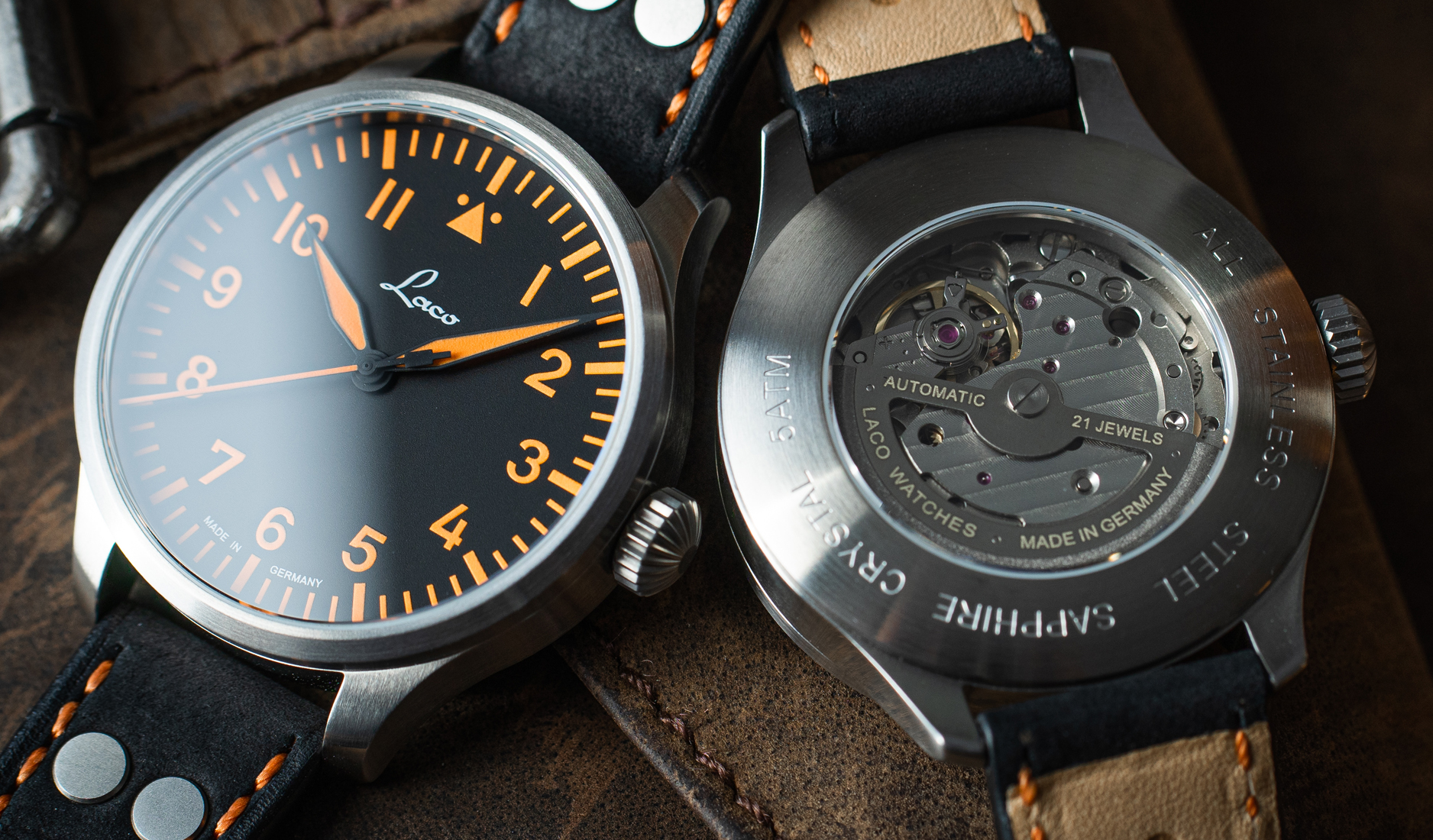
The two timepieces are powered by the automatic Miyota Calibre 821A, which is widely used in the mechanical watch industry for its reliability and ability to keep decent time. Both watches come in a friendly 39mm matte polished stainless steel case. Calf leather straps, with orange stitching to match the markers, give the watches an edgy look and help enhanced their rugged appeal.

If you are in the market for affordable and reliable pilot's watches, these two check everything on the list without breaking the bank. They certainly catch the eye, discreetly, and, like everything Teutonic, are reliable, utilitarian and robust.
