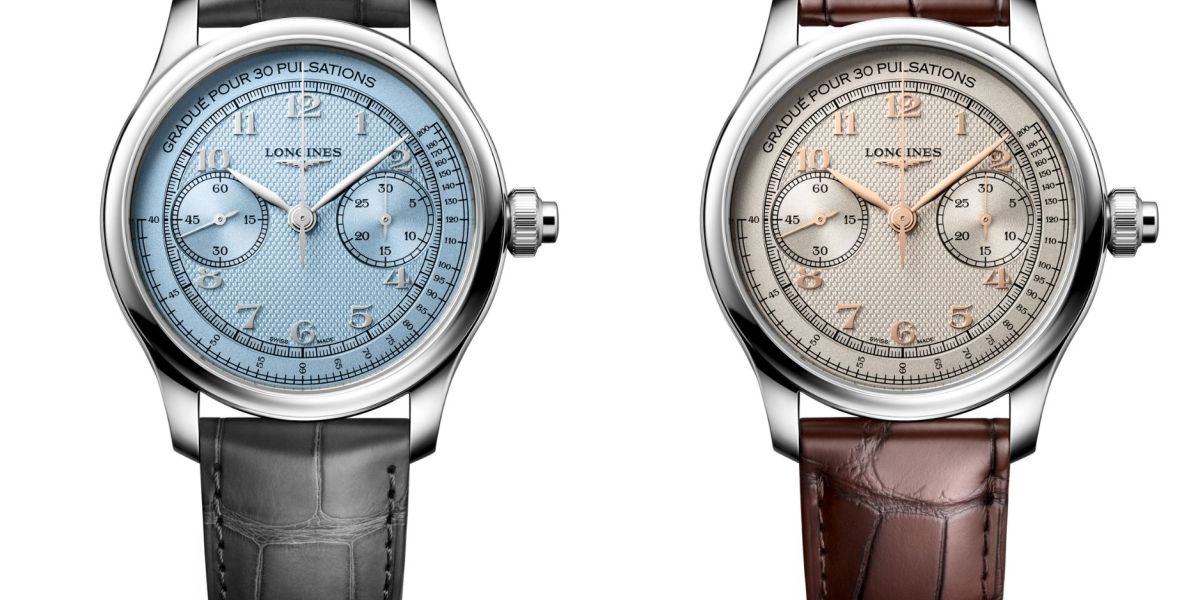

One button, one old-school complication and a surprisingly modern take on the classical chronograph
Longines has been digging productively into its archives for years, and the new Master Collection Chrono Monopusher revives an old idea that still feels entirely relevant.
The key is in the name. Start, stop and reset are all controlled through a single pusher integrated into the crown, giving the watch the cleaner profile that made early wrist chronographs so appealing in the first place. It is also the first monopusher in the Master Collection.
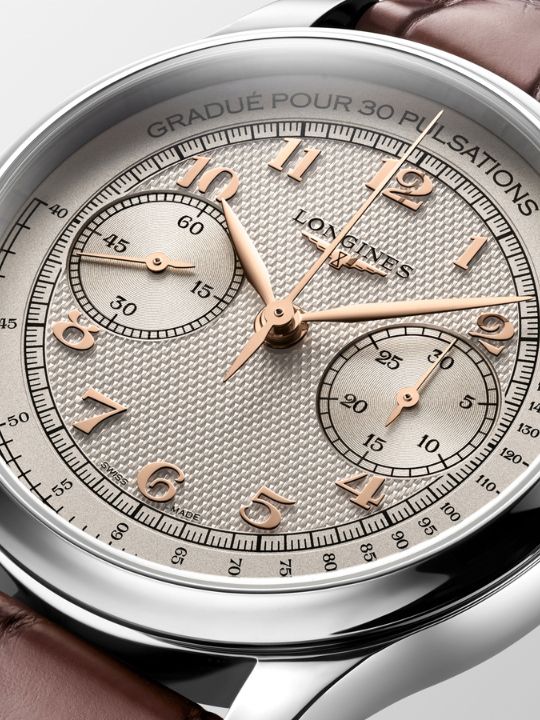
The layout keeps things equally disciplined. A central chronograph seconds hand is joined by a 30-minute counter at three o’clock and small seconds at nine, while a pulsometer runs around the dial perimeter. Originally intended to let doctors calculate a patient’s pulse—typically over 30 beats—the scale now reads as both functional detail and nicely judged period reference.
Underneath is the manually wound L799.5, an exclusive column-wheel calibre with a silicon balance spring, 23 jewels and a 28,800vph frequency. Power reserve is up to 68 hours, and the movement is visible through the sapphire caseback. The decision to go manual rather than automatic feels especially appropriate here: a monopusher is already a rather deliberate object, so winding it by hand feels entirely in character.

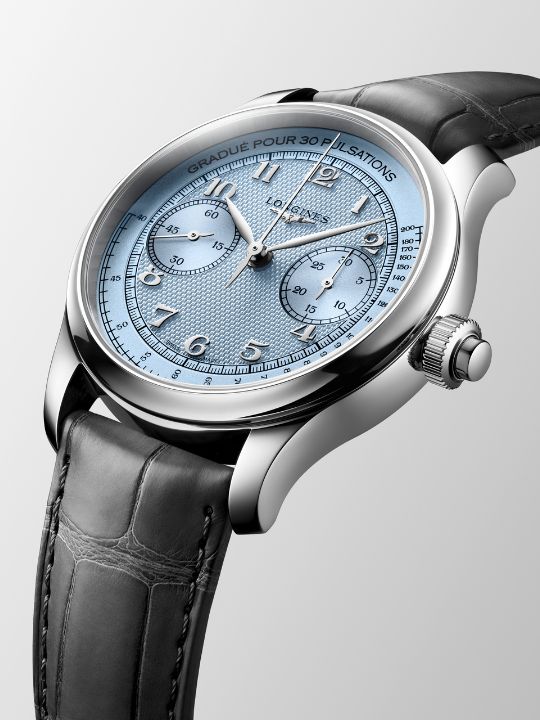
The stainless-steel case measures 41mm across, 12.6mm thick and 48.6mm lug-to-lug. A concave bezel softens the proportions, while the two dial options push the watch in quite different directions: silver opaline for the more traditional look, or frosted blue barleycorn for something cooler and less predictable. Both use engraved sub-dials and applied Arabic numerals, with either polished rhodium or rose-gold-toned details.
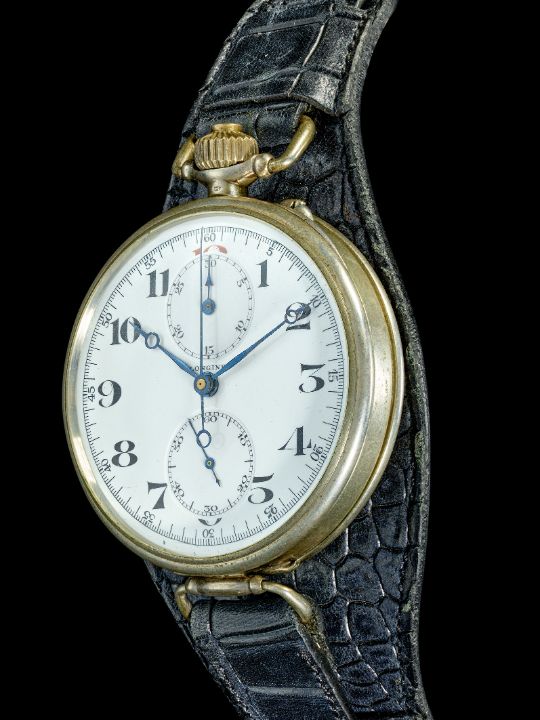
There is real lineage behind the concept, too. Longines produced wrist-worn monopusher chronographs as early as 1911, followed by the compact 13.33Z chronograph calibre in 1913.
That history matters, but what makes this one interesting is how little it leans on nostalgia. It is clean, mechanical and just eccentric enough—the sort of complication collectors tend to notice.
