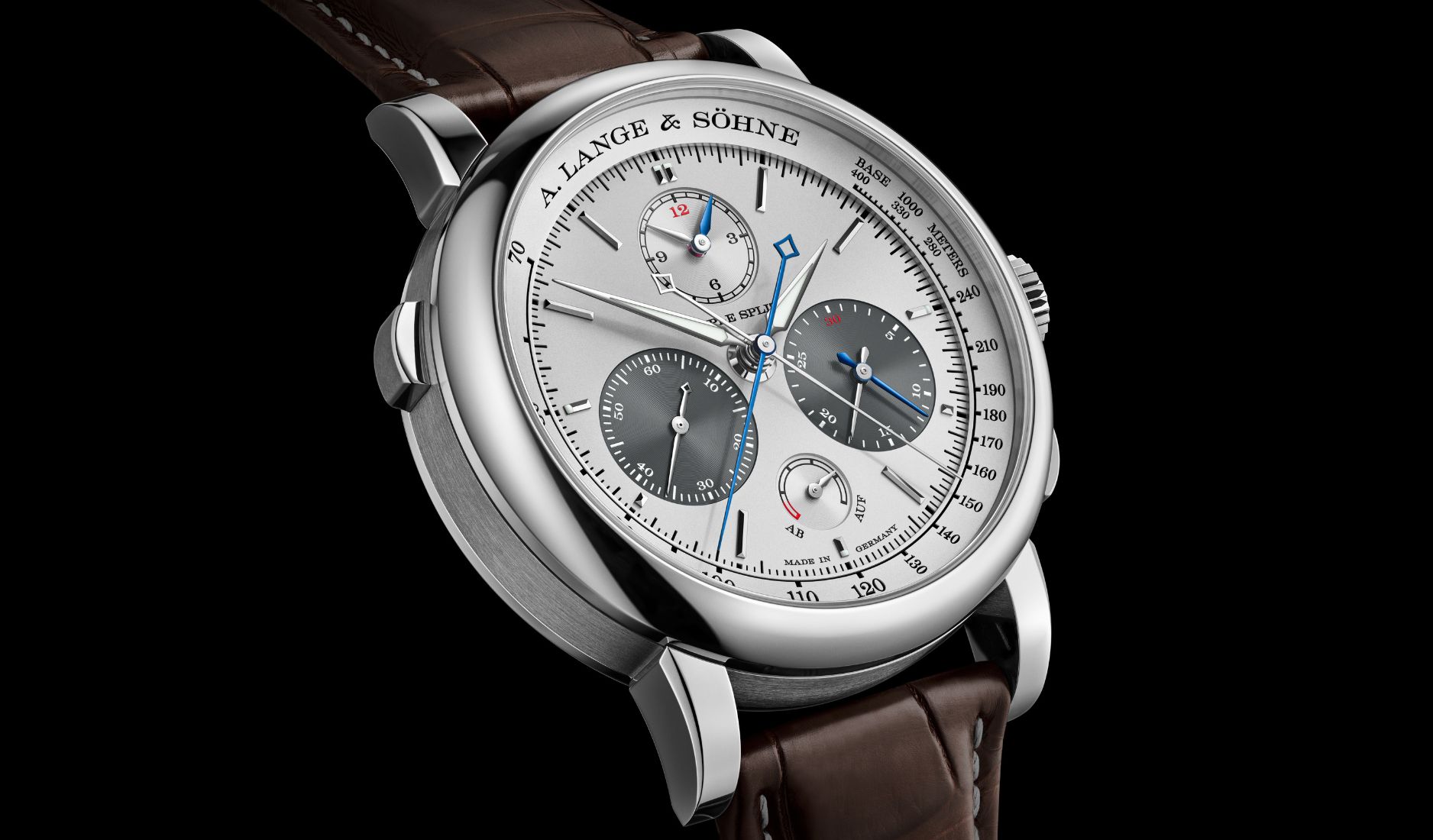

A new platinum iteration brings renewed attention to one of the Saxon watchmaker’s most sophisticated
There is a point at which a chronograph stops being merely a stopwatch and becomes an exercise in mechanical choreography. The A. Lange & Söhne Triple Split occupies that territory. Introduced in 2018, it extended the rattrapante function from the seconds counter to the minutes and hours, allowing intermediate and comparative measurements to be made over periods of up to 12 hours. For its third iteration, the Saxon Manufacture has not altered that underlying mechanism. Instead, it places one of its most intricate chronographs in platinum for the first time, giving an established technical achievement a new case material and visual identity.
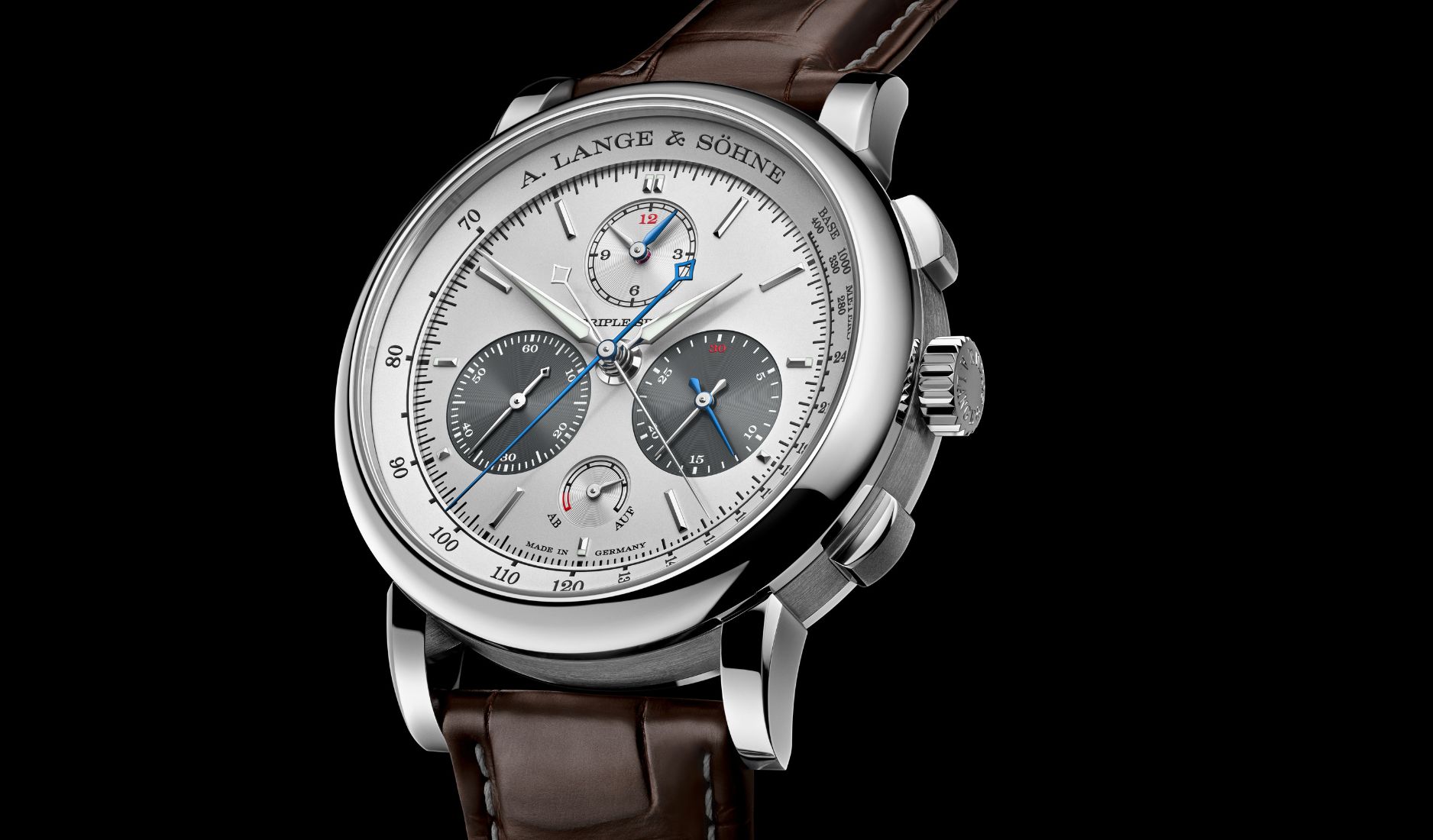
The idea behind it is the culmination of a progression that began with the Datograph in 1999, which established Lange’s modern approach to the chronograph with an in-house movement combining a flyback function and jumping minute counter. The Double Split of 2004 introduced a second layer of rattrapante functionality, making comparative measurements possible for up to 30 minutes, rather than the 60 seconds offered by conventional split-seconds chronographs. The Triple Split pushed the concept further in 2018, adding rattrapante functions for the minute and hour counters and extending the measuring range to 12 hours. In simple terms, Lange’s chronograph evolved from measuring seconds to comparing events separated by minutes, and ultimately by hours.
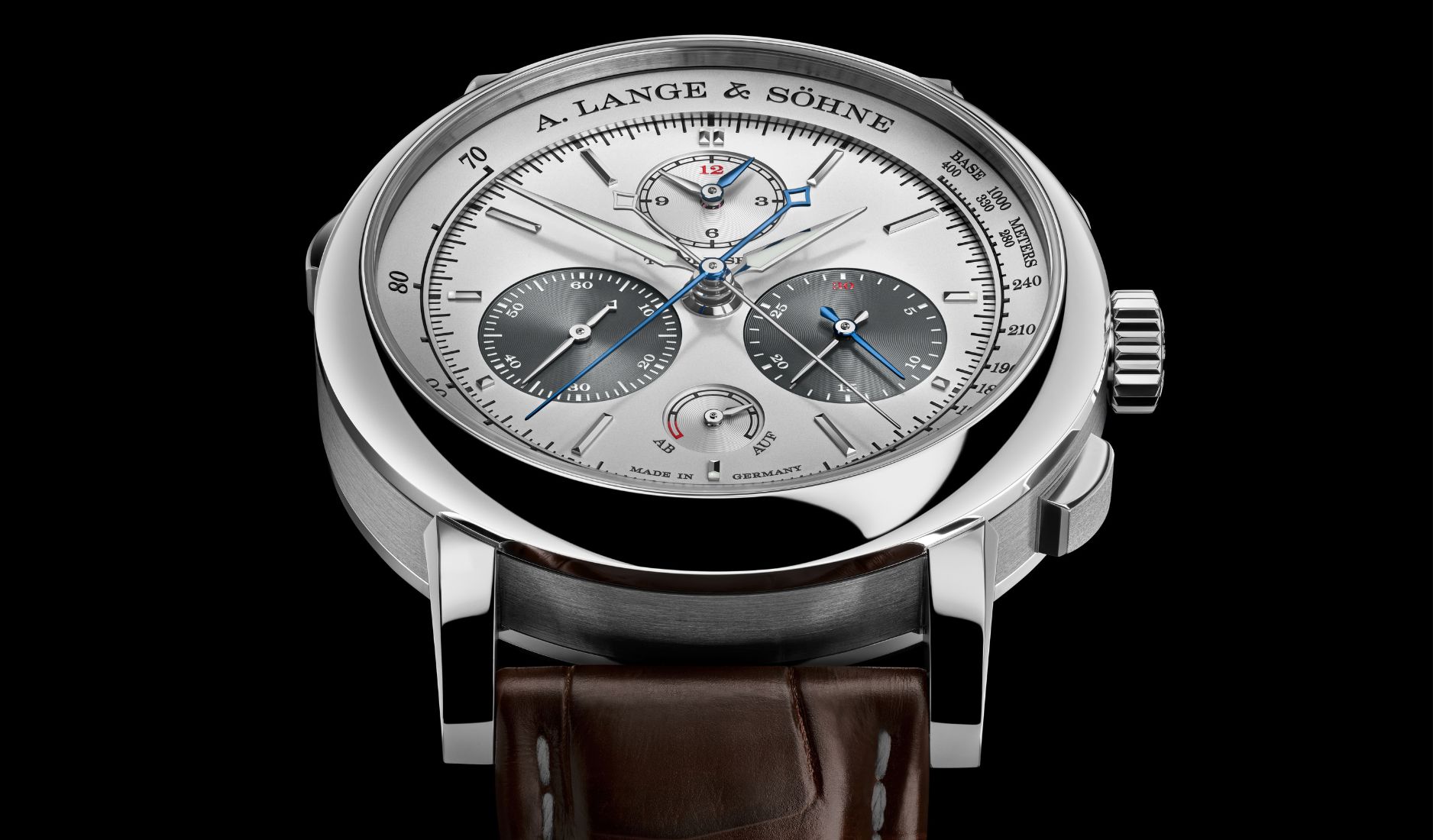
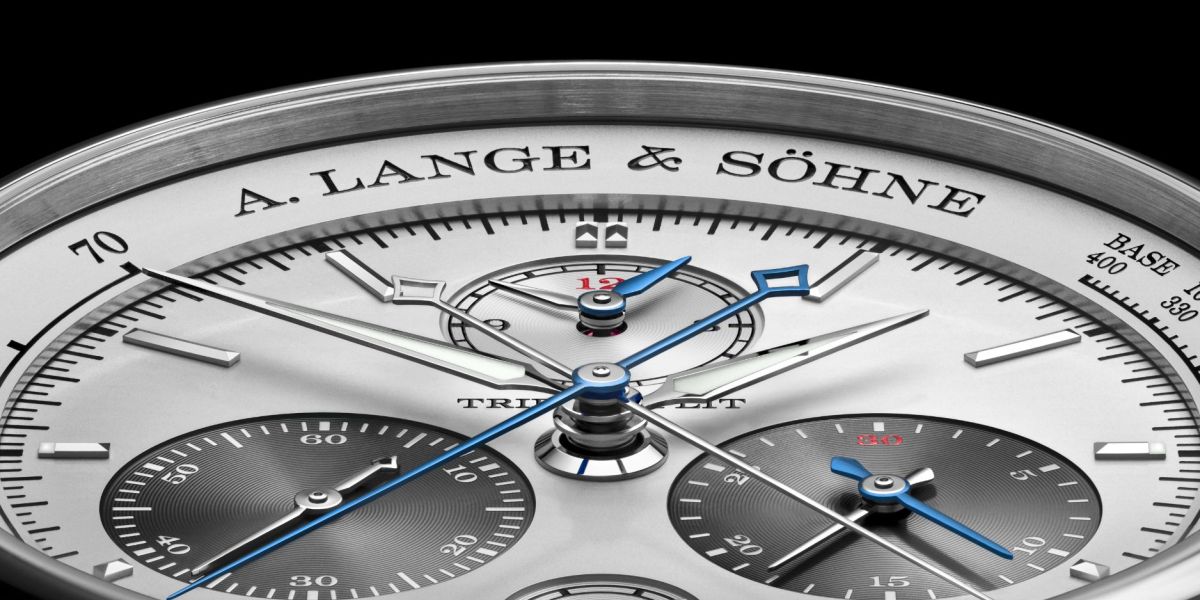
Understanding the Triple Split begins with its three pairs of chronograph and rattrapante hands. When the chronograph starts, the hands initially run together, with the chronograph hands recording the running measurement while their superposed rattrapante counterparts are ready to capture an intermediate reading. Pressing the rattrapante pusher freezes the three blued hands while the chronograph continues. A second press brings the stopped hands back into alignment. Because the system operates across the seconds, minutes, and hours, multiple intermediate or comparative measurements can be taken during an hours-long event without sacrificing the overall timing. The flyback function further allows a measurement to be stopped, reset, and immediately restarted.
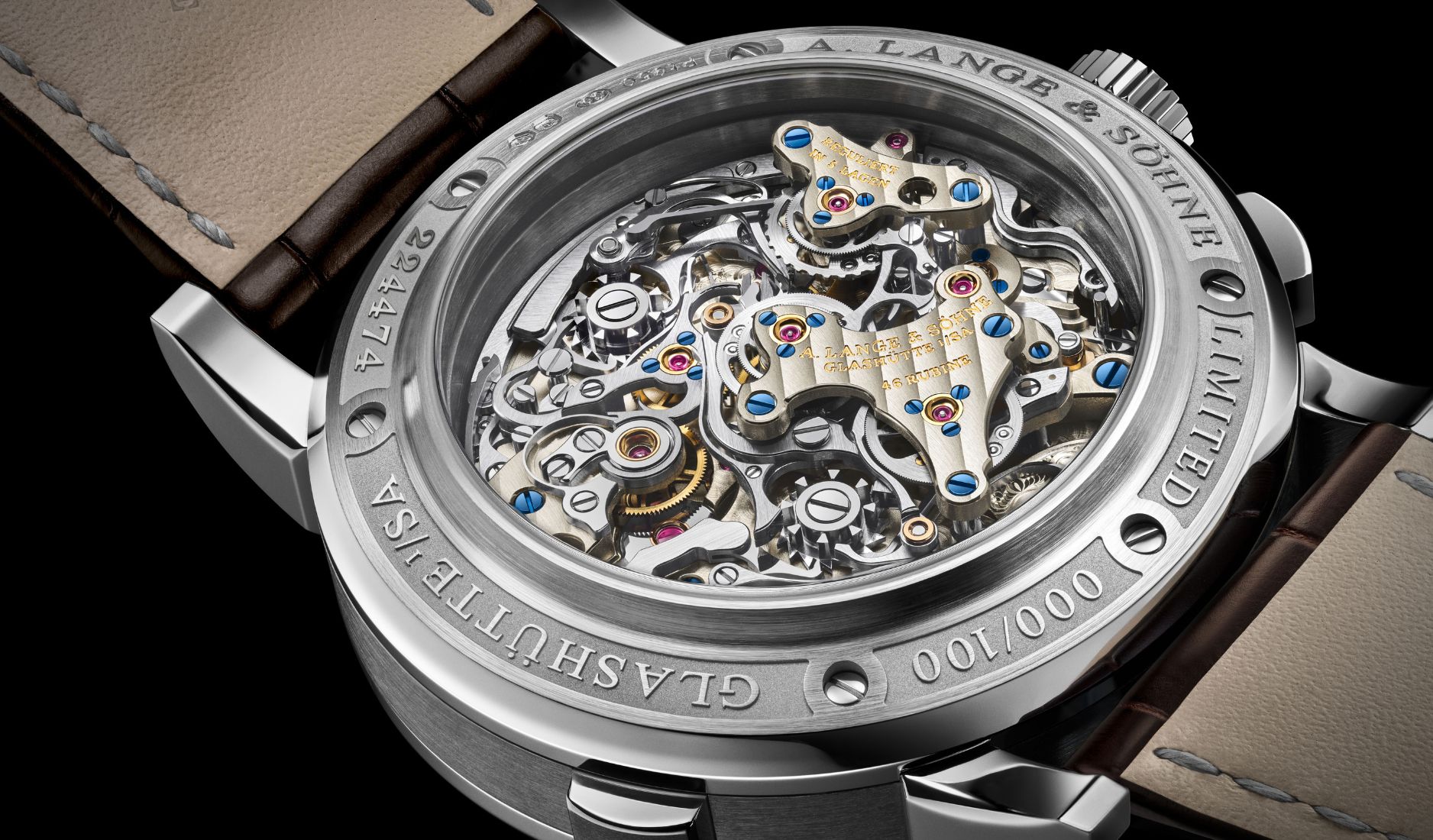
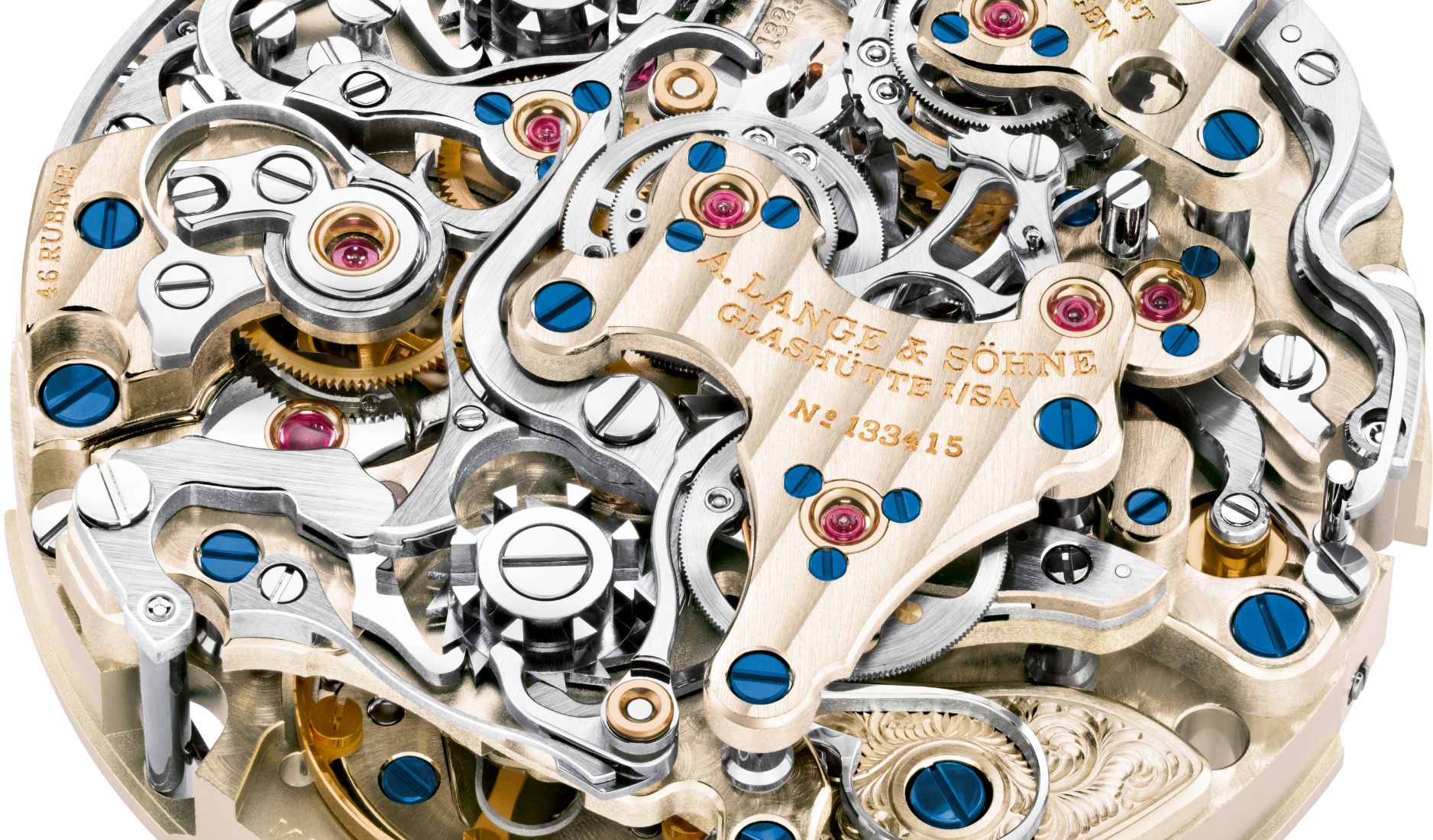
That seemingly simple sequence demands considerable mechanical coordination. The manually wound L132.1 manufacture calibre comprises 567 components, including the wheels, levers, springs, clutches, and jumpers needed to orchestrate the triple rattrapante system. Stopping the rattrapante hands and advancing the minute counters creates friction losses, so Lange developed a patented disengagement mechanism to separate friction-intensive processes on the seconds and minute-counter arbours and maintain rate stability. The movement’s complexity is matched by its finishing: untreated German-silver bridges carry Glashütte ribbing, while levers and springs are bevelled, acute internal angles are polished, and five gold screwed chatons and a hand-engraved balance cock complete the decoration.
The new edition changes what surrounds this mechanism rather than what happens inside. Its 950 platinum case measures 43.2mm in diameter and 15.6mm in height, framing a rhodié-coloured dial with darker grey auxiliary dials. Blued rattrapante hands provide a clear visual cue to the complication, while red accents distinguish selected indications. The hour counter occupies 12 o’clock, the jumping minute counter 4 o’clock, and the subsidiary seconds 8 o’clock; the UP/DOWN indicator at 6 o’clock shows the 55-hour power reserve. Limited to 100 pieces and paired with a dark-brown alligator strap, the Triple Split Ref. 424.025F is therefore not a reinvention. Its appeal lies in something subtler: seeing one of Lange’s most ambitious mechanical ideas realised in what may be its most refined expression yet.