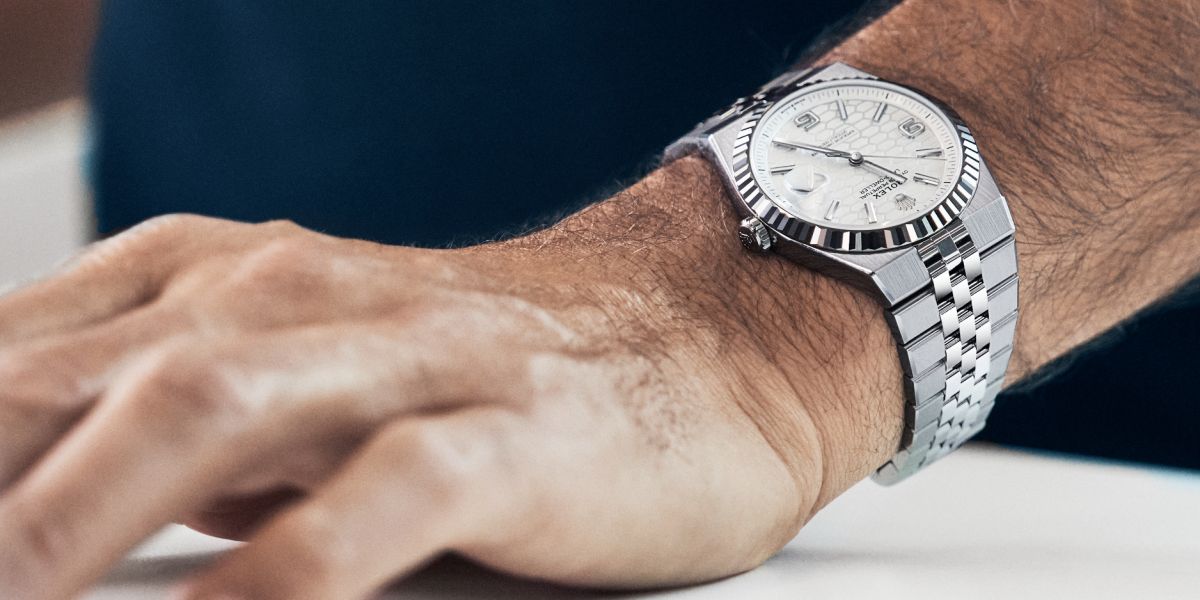

The new Oyster Perpetual Land-Dweller shows the world that Rolex does not just make incremental changes; it can make leaps of innovation when it chooses.
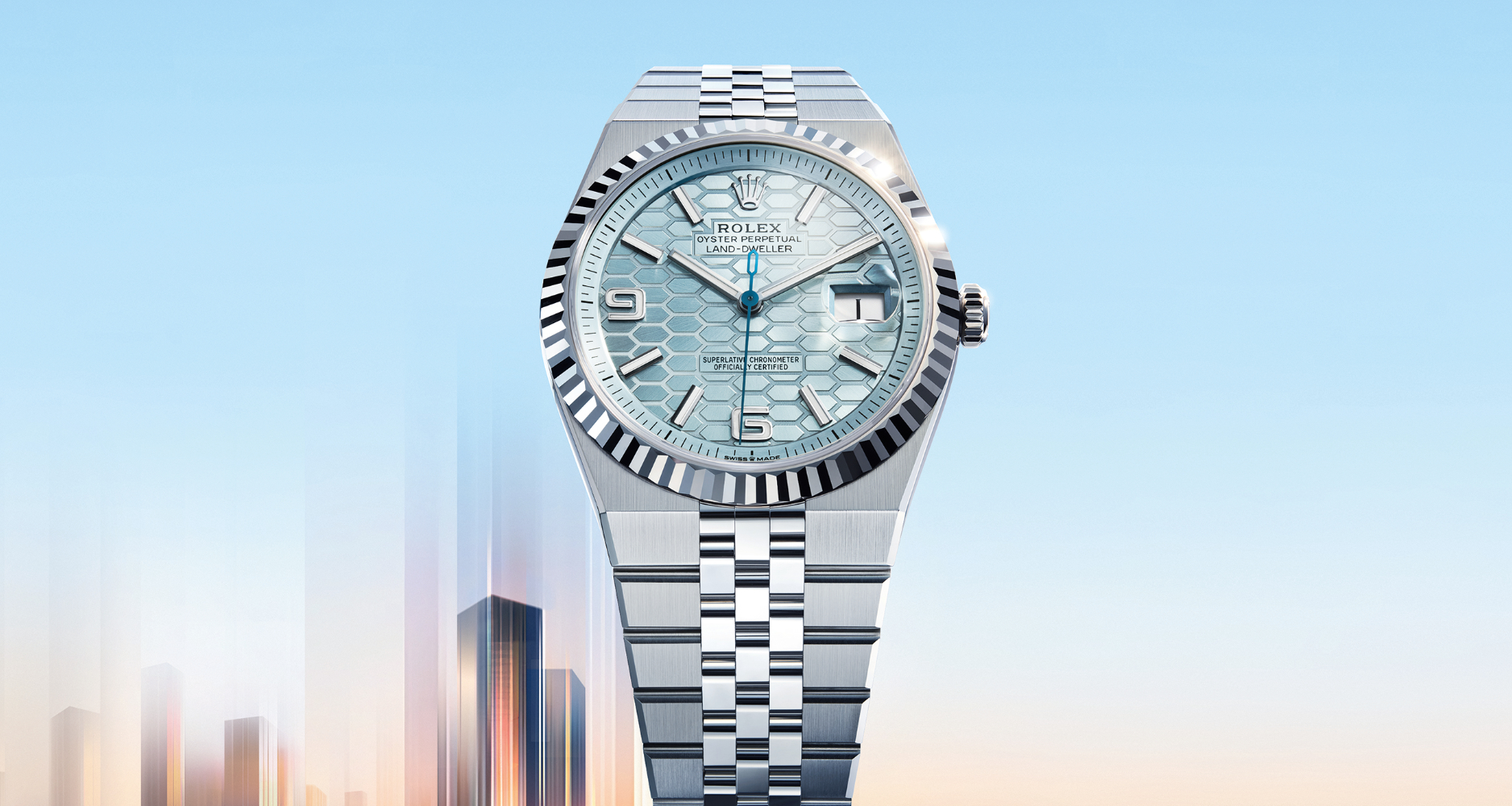
By now, you would have seen, browsed, or even studied in detail the numerous documents and articles that have been published about Rolex’s latest family member. Or you’ve just seen Insta-shots of the watches over and over, wondering what the big deal is about the Oyster Perpetual Land-Dweller. Here’s a quick breakdown of the watch so you can impress friends or just sound familiar with the new release, plus info on what else is striking from Rolex this year.
The Land-Dweller completes Rolex’s conquering of domains that began with the Sea-Dweller, followed by its most complex movement in the Sky-Dweller. In terms of hierarchy, it stands just below the Day-Date within the Oyster Perpetual umbrella in terms of importance. It’s also a watch that celebrates 120 years of Rolex’s founding while also marking 80 years of the Datejust. Where the Datejust marked a global change in the way we used the calendar, the Land-Dweller marks a change in how Rolex develops its timekeeping.
Not a Swiss Lever Escapement
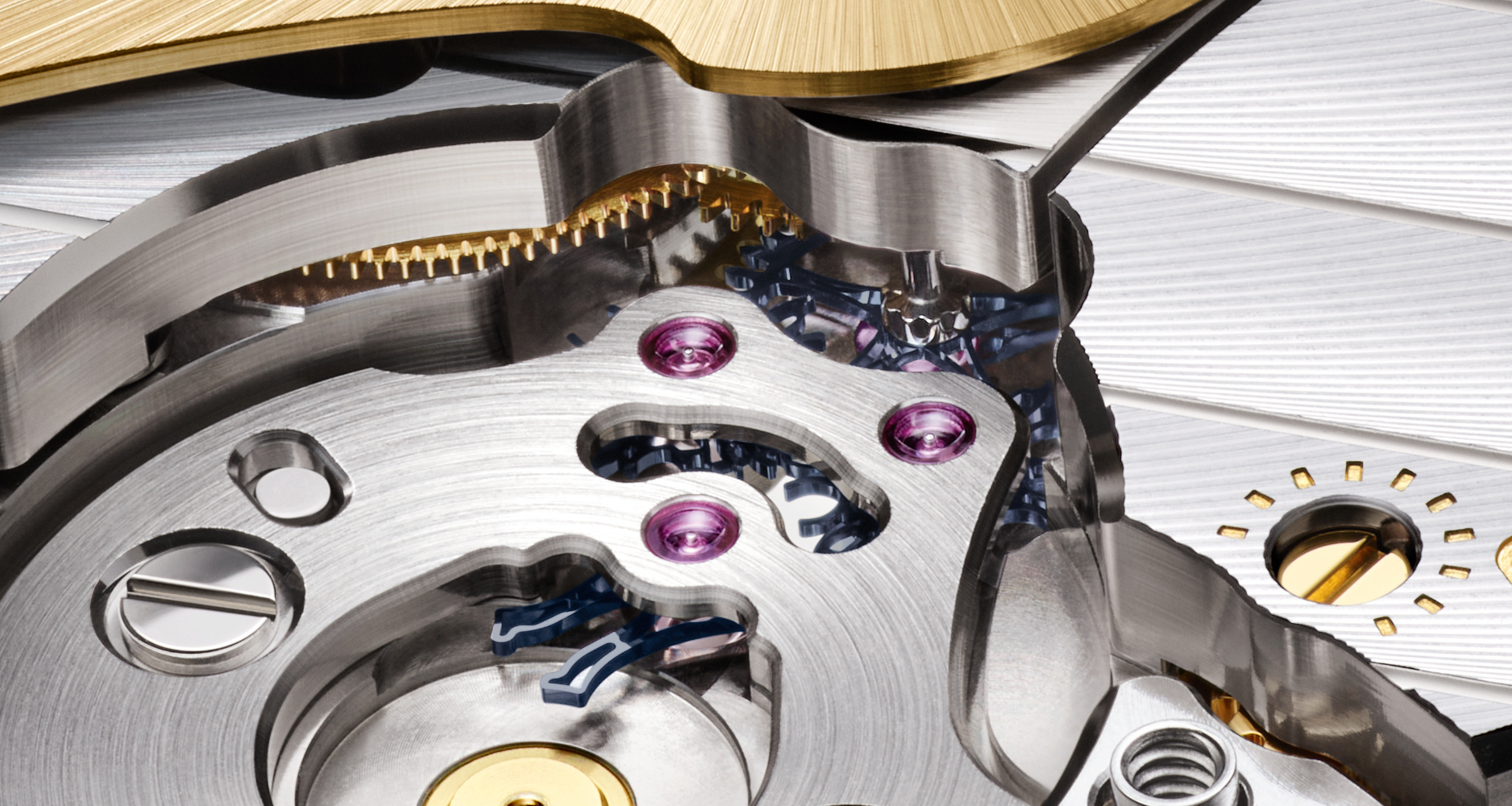
Nearly all modern mechanical watchmaking is based on one key escapement – the Swiss lever. There are many other types of escapements that can regulate timekeeping, but the Swiss lever is most common because it is well-understood, self-starting, and a stable convention. It is not the most efficient, but its problems are familiar to most watchmakers. The Dynapulse escapement, which is what Rolex has developed in the Land-Dweller, applies some of the principles of a different escapement, the natural escapement, in its operation. A transmission wheel connects to two distribution or ‘escape’ wheels that deliver an impulse to the oscillator via an impulse rocker. It’s a dual impulse escapement but not a dual direct – both distribution wheels are constantly engaged.

This minimises friction, allowing Rolex to increase efficiency in energy transmission by designing how each part engages the other. The choice of material for each component (lighter is better) also reduces weight and inertia. In the case of the calibre 7135, silicon is used, with a ceramic balance staff specially shaped using a femtosecond laser to optimise performance and reliability. Along with a thicker Syloxi hairspring, the Dynapulse escapement saves enough energy to run the movement at 5Hz and lose just 10 per cent of power reserve in the process.
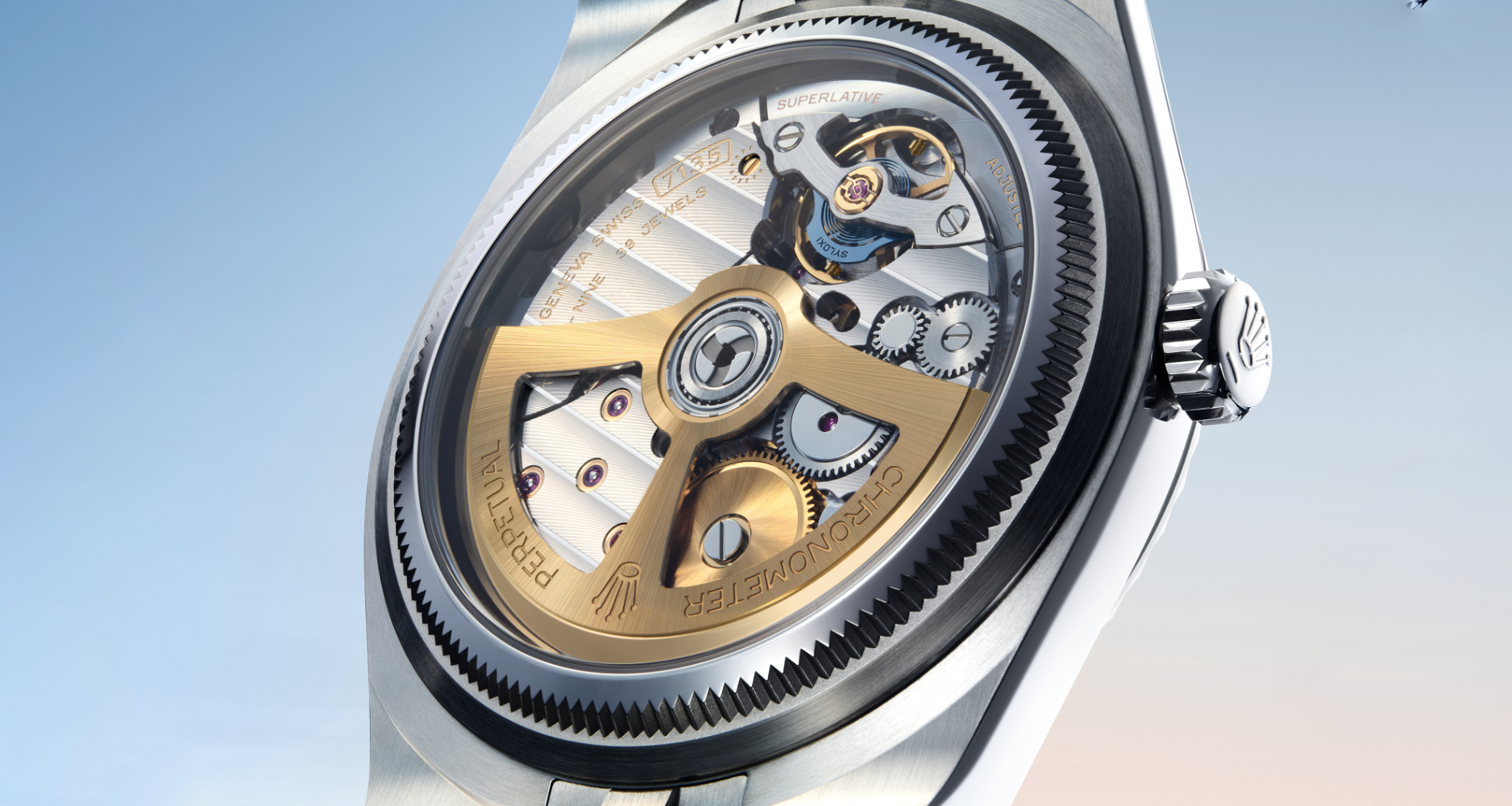
A New Materials Era
Calibre 7135 is significant as it represents a major shift in Rolex’s policy towards new materials in its movements. Silicon has always been positioned as an equal alternative to traditional escapement components – this is the first time it’s seen as having incomparable benefits. Ceramic as well is enjoying a new position on multiple aspects of the watch – see the GMT-Master II. It also comes at a time when Rolex is adding a new manufacture to its production process – it may well be that Dynapulse will be expanded to other collections. Along with the 16 patents dedicated to the movement, there are also two patents dedicated to the case and bracelet.
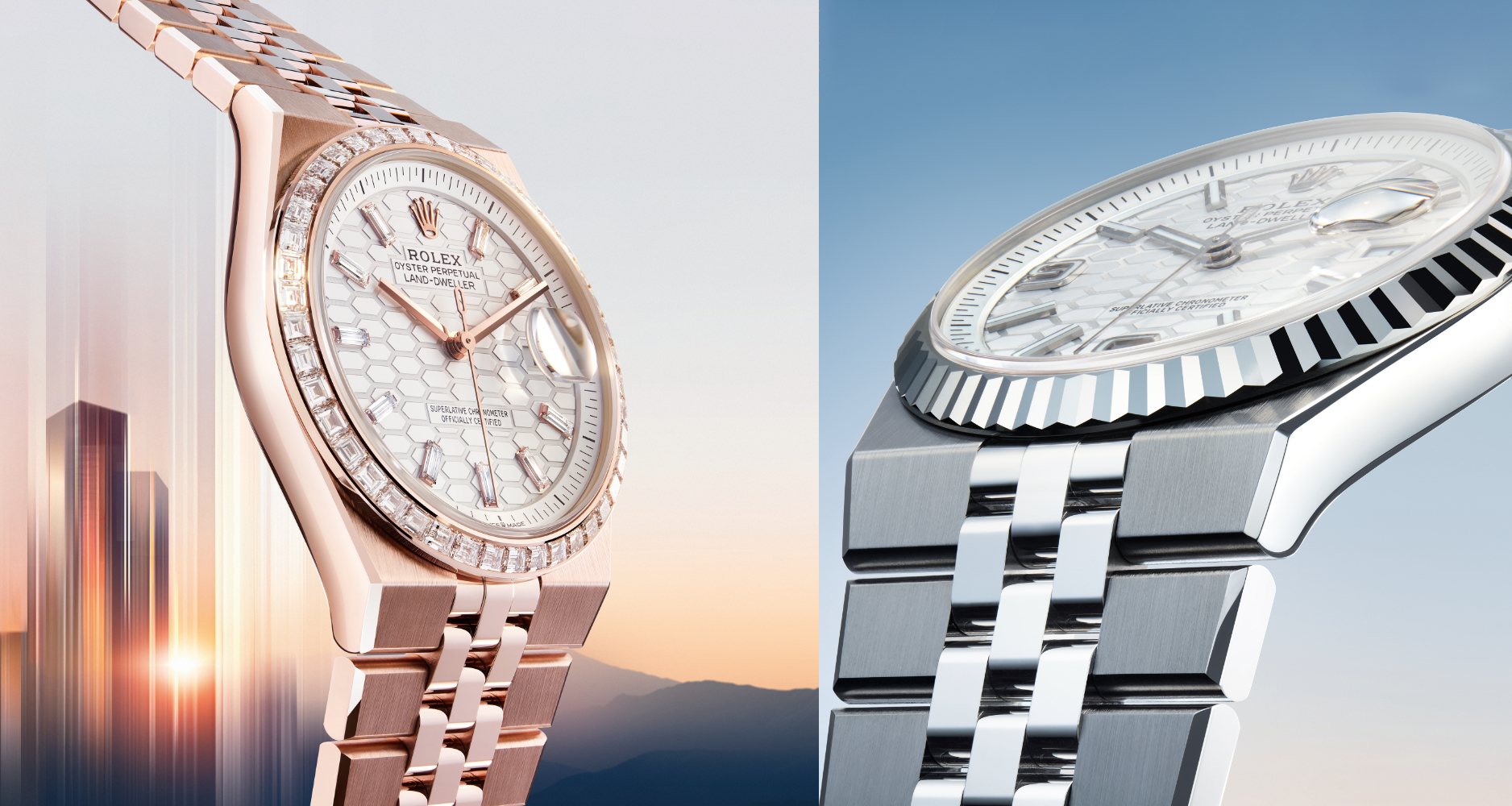
To create a very seamless and slimmed-down construction, Rolex developed an integrated case and bracelet that is reminiscent of the Oysterquartz Datejust models from the late 1970s. These had angular lines, shallow fluting on the bezel, and low-profile flanges due to the slimness of the quartz movement. In the case of the calibre 7135, which also has a slim profile, it made sense for Rolex to emulate the same design but with a stronger sense of modernity.
The Crownclasp, which is similar to Rolex’s President bracelet, is attached to the central link with a spring bar held in place by a screw and enclosed by ceramic inserts (patent pending). The inner bezel is, in fact, a part of the dial, which has a laser-etched honeycomb design repeated on the counterweight on the seconds hand. Finally, there’s the flattened bracelet, similar to the Jubilee bracelet, with satin-finished and mirror-polished surfaces and angles. Rolex also modified the waterproofness system around the crystal of the restyled Oyster case specially developed for the model.
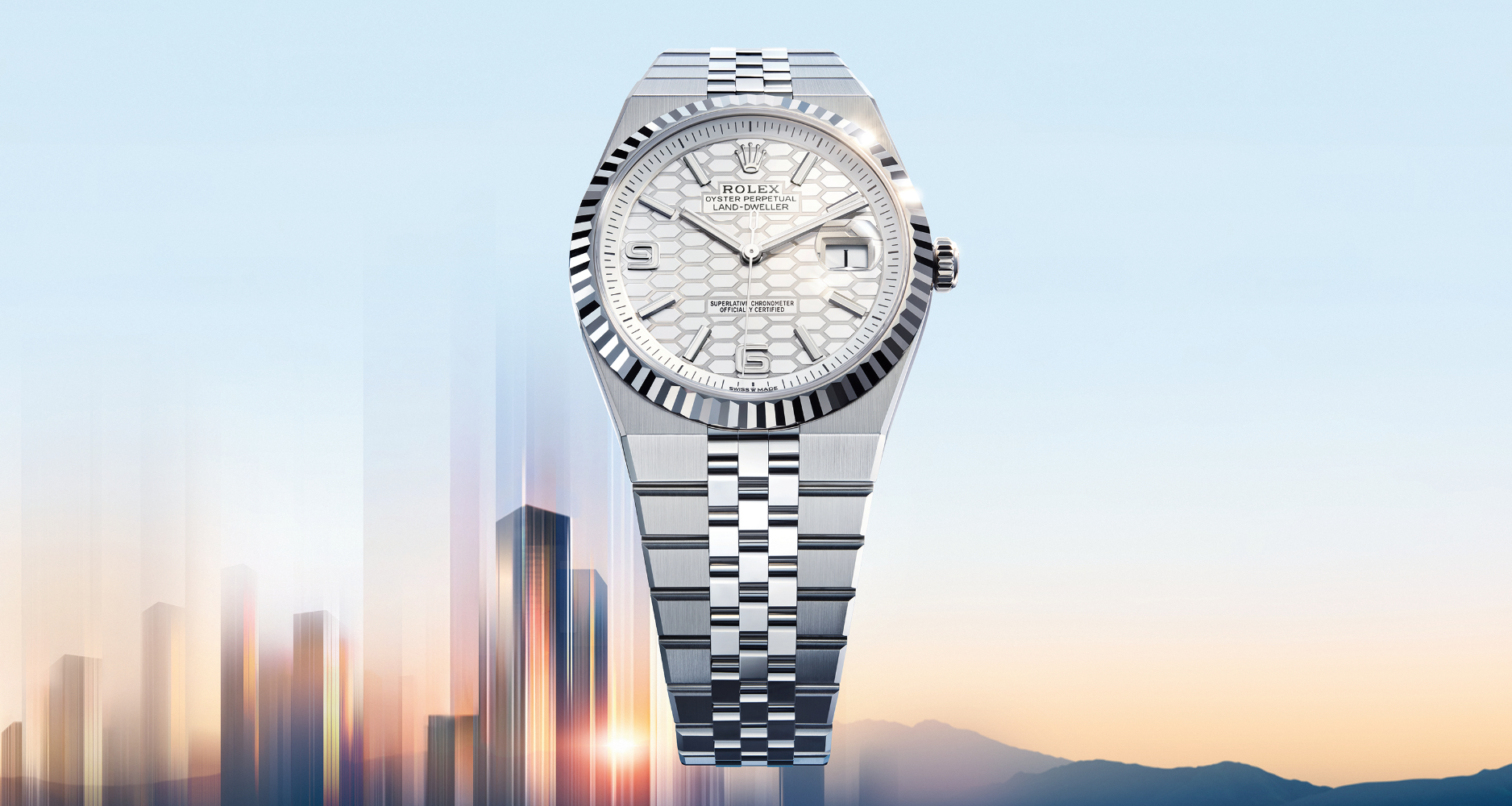
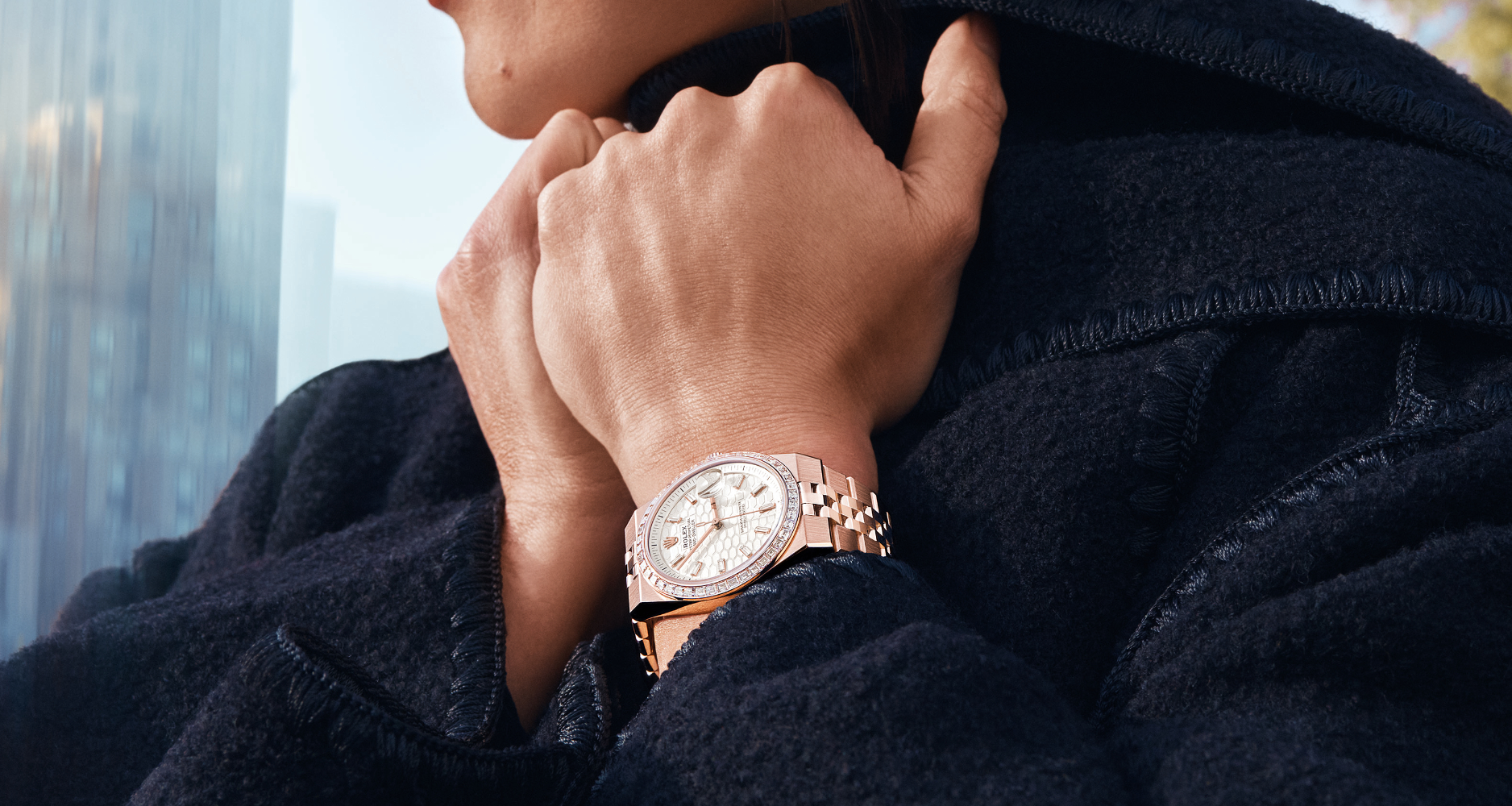
The Land-Dweller is available in 36mm or 40mm cases. These come in white Rolesor (only with an 18 ct white gold bezel), 18 ct Everose gold with or without diamonds on the bezel and hour indexes, as well as 950 platinum with ice-blue dial and the option of diamonds as well. If you have dreamt of an integrated bracelet watch from Rolex, here’s your chance to get one.
